
Last updated November 4, 2026
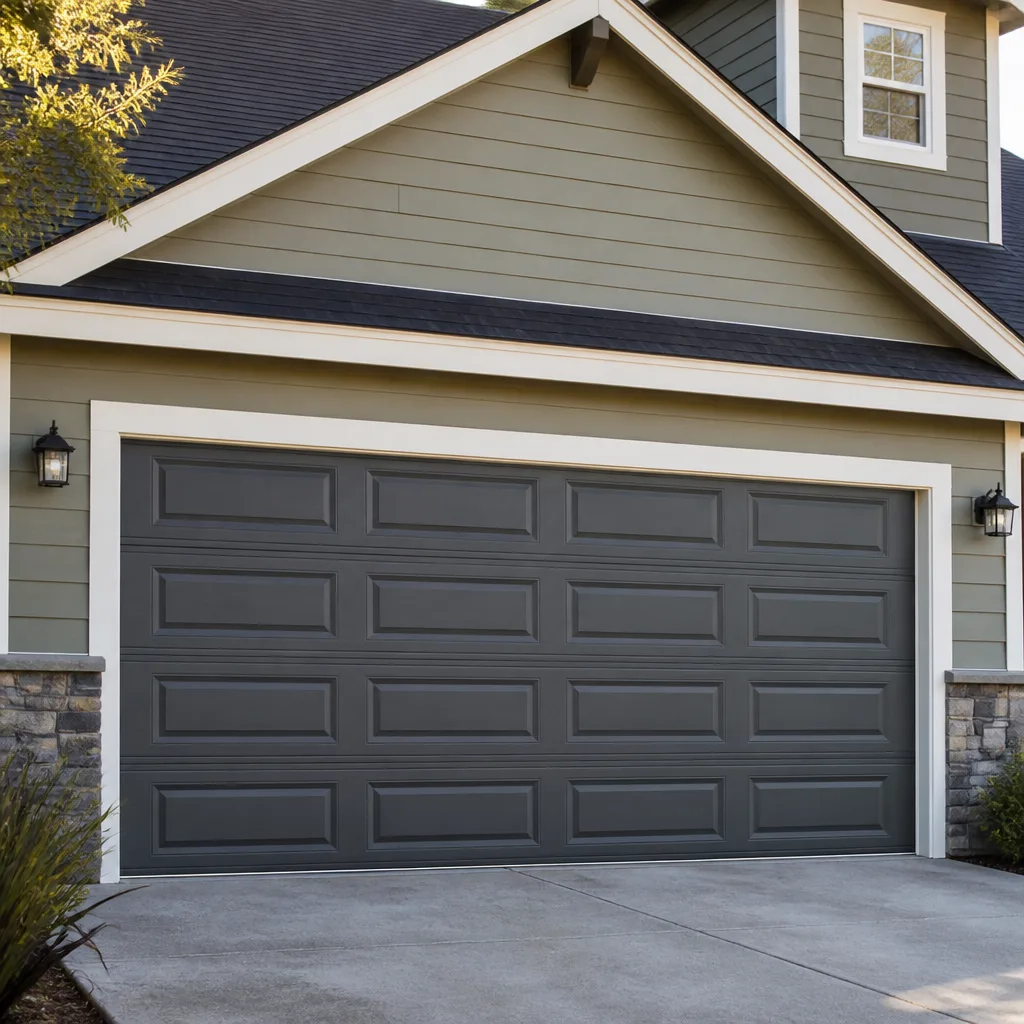 Raised-panel steel
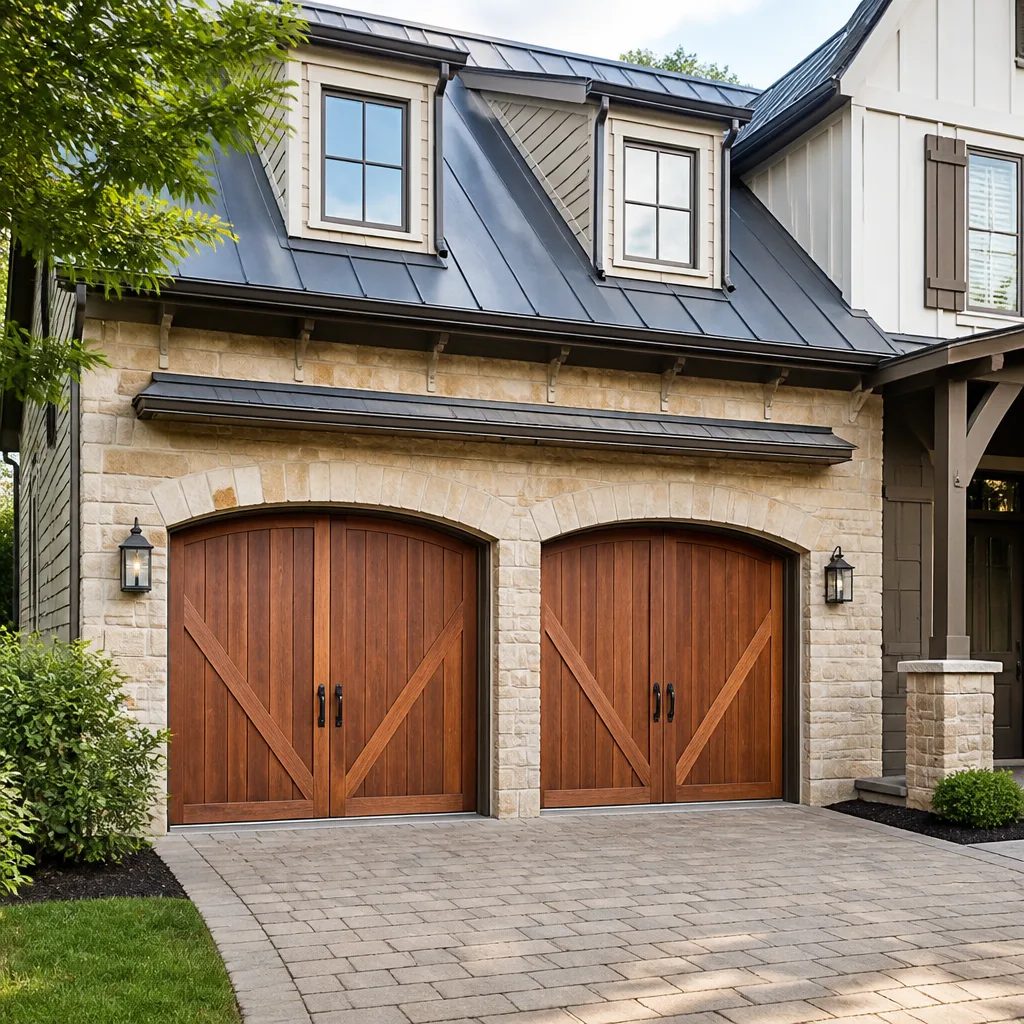 Carriage house
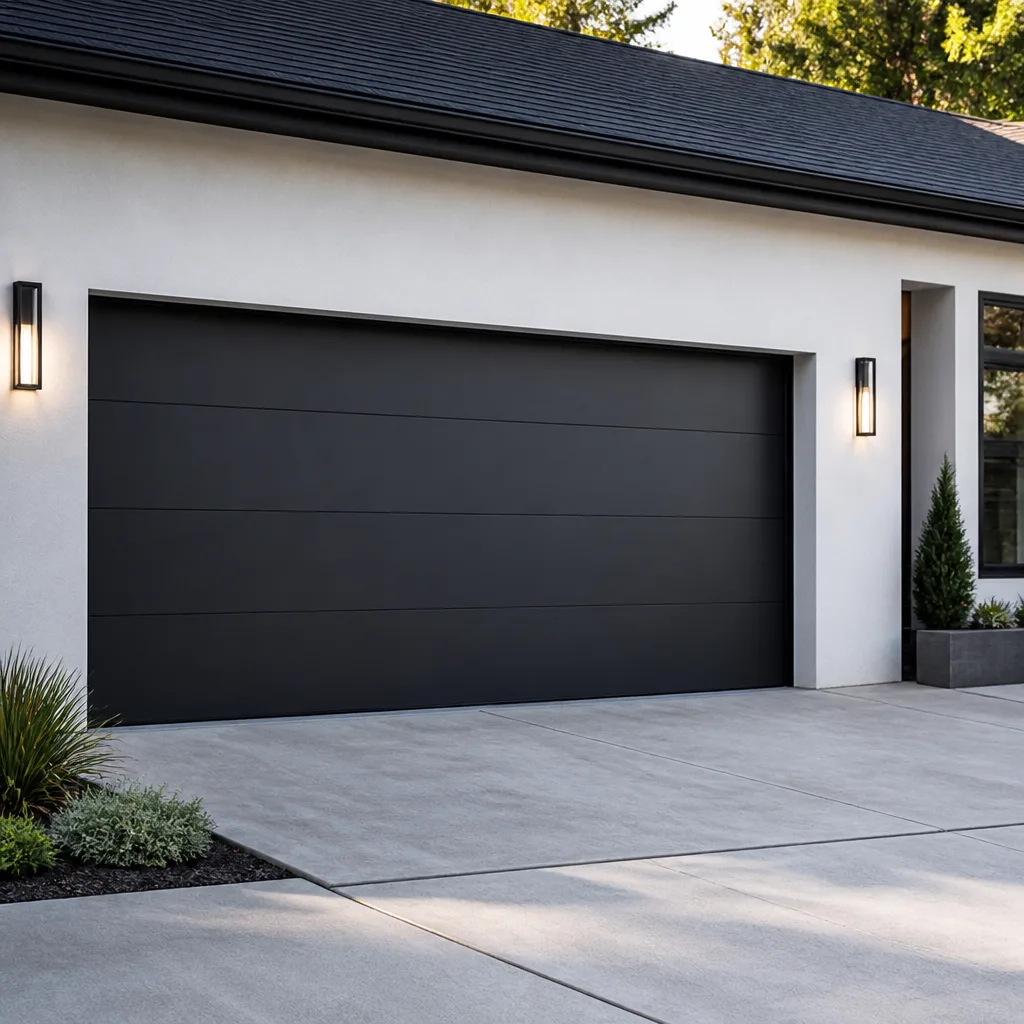 Modern flush
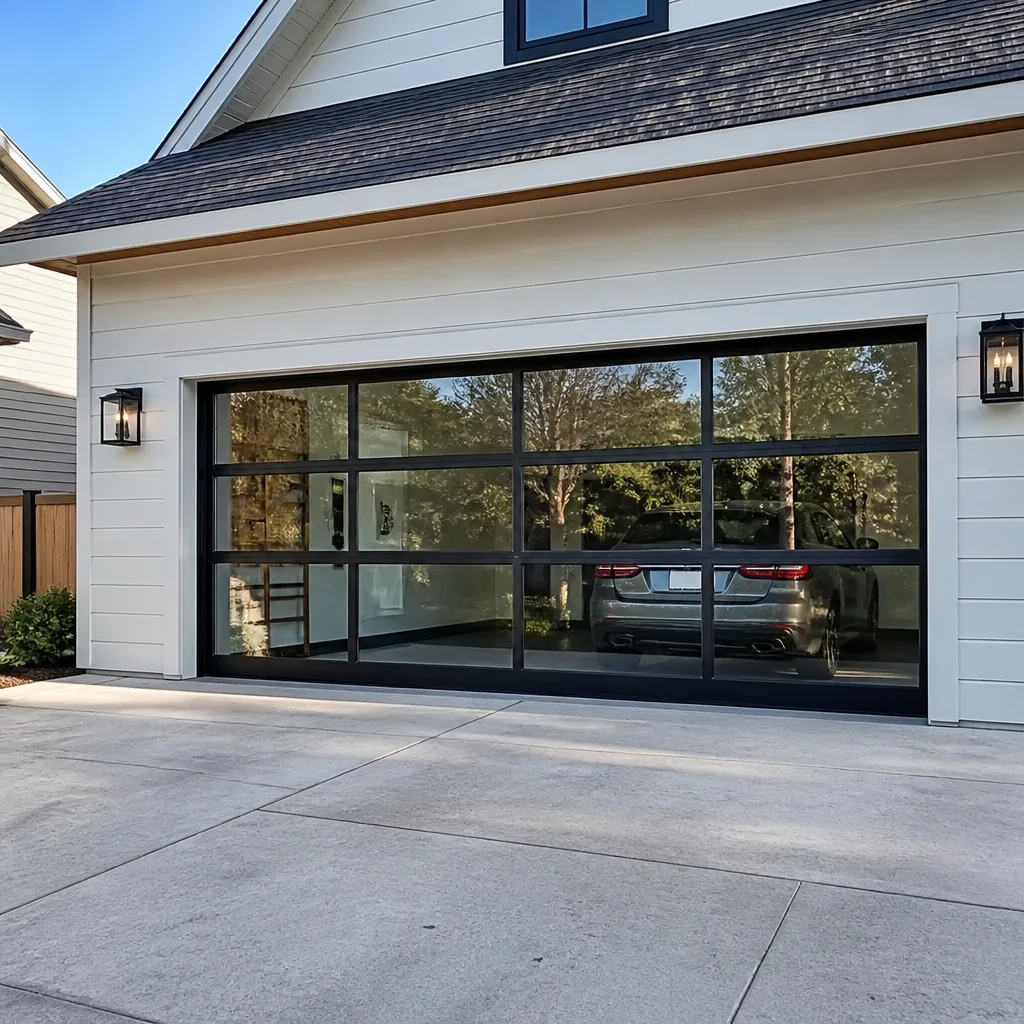 Full-view glass
 LiftMaster openers
 Chamberlain openers
Full 25-point door and opener safety check with every visit - springs, cables, rollers, tracks, and your LiftMaster or Chamberlain opener included
You get a price before we start. It does not change when the truck arrives.
Get your free estimateGarage Door Repair Troubleshooting in Sylmar: Common Problems and How to Fix Them
The door that “just stopped working” overnight almost never actually stopped overnight. There were warning signs for weeks, a slight grind here, a half-second hesitation there, a cable that looked a little loose but still worked, that most homeowners in Sylmar didn’t know to look for. By the time the door refuses to move, the problem has usually been developing for a while. This guide maps the specific symptoms you’re seeing to the actual mechanical or electrical cause behind them, so you know whether you’re looking at a quick fix, a part replacement, or a job that belongs in professional hands. We’ll also cover what Sylmar’s valley heat and Santa Ana winds do to door hardware differently than what you’d see in coastal LA.
Quick Answer
Most garage door repair problems in Sylmar fall into one of five root causes: broken spring tension, misaligned safety sensors, opener logic or gear failure, track or cable wear, or a door that’s simply out of balance. If the door moves unevenly, makes a grinding sound, or only opens a few inches, stop using it and check the balance and cables first. If the opener hums but the door doesn’t move, or the door reverses before closing, the fix is usually a sensor or travel-limit adjustment you can do yourself in ten minutes.
Styles & brands we work with
- Raised-panel steel
- Carriage house
- Modern flush
- Full-view glass
- LiftMaster openers
- Chamberlain openers
Table of Contents
- Symptom-to-Cause Matrix: What Your Door Is Telling You
- The Safe-to-DIY Line vs. Stop-and-Call Work
- How to Test Opener vs. Door vs. Sensors Before You Call
- How Sylmar Heat and Santa Ana Winds Accelerate Wear
- Cable Fraying and Spring Wear: What to Watch For
- How to Check Door Balance and Why It Matters
- What to Tell a Technician for an Accurate Phone Quote
- When the Door Won’t Move at All: Step-by-Step Checklist
Symptom-to-Cause Matrix: What Your Door Is Telling You
Every garage door symptom has a mechanical or electrical source. Matching what you see and hear to the right category is the difference between a ten-minute adjustment and a spring replacement. Here’s how the most common complaints in Sylmar map to causes.
Door reverses before it closes
This is almost always the safety sensors near the floor on either side of the opening. They’re the small units with blinking lights, mounted about six inches up. When they’re misaligned or blocked, the opener assumes something is in the way and reverses. Check that both lights are solid, not flickering, and that nothing, a broom, a hose, a stack of boxes, sits in the beam path. This is the single most common false alarm in garage door troubleshooting, and it’s almost always a no-cost fix.
Door only opens a few inches, then stops
This is typically a broken spring or a spring that’s lost tension. When a spring snaps, the opener suddenly tries to lift the full weight of the door, which it isn’t built to do. The door rises a few inches, strains, and gives up. If you hear a loud bang from the general area of the door before this happens, that’s the spring letting go. Stop using the door immediately. This is not a DIY part.
Door moves unevenly, one side higher than the other
Uneven movement points to cable problems, a bent track, or worn rollers. The cables on each side must lift in sync. When one cable is frayed or has slipped off its drum, that side lags. You can sometimes see the cable hanging loose near the top of the door when it’s closed. A bent track has the same effect and usually makes a scraping sound as the rollers fight the metal.
Opener runs but door doesn’t move
When you hear the motor running but the door stays in place, the opener’s internal gear or drive system has likely failed. On chain and screw drive openers, a worm gear or sprocket can wear out after years of use. On belt drive units, the belt itself can strip. This is a garage door opener repair situation specifically, not a door hardware problem, and it’s one of the most common calls we handle.
Door slams shut or drops hard
A door that falls instead of lowering smoothly has lost its spring counterbalance. Either a spring has broken or the cables have come off. This is dangerous, not just noisy. The door can drop fast enough to injure someone or damage a vehicle. Do not operate the door by hand if it feels heavier than usual or drops when you let go at the halfway point.
Loud grinding or squealing
Grinding usually means worn rollers or a dry chain or screw. Squealing often comes from hinges and roller bearings that need lubrication. A dry metallic pop that happens at the same spot every cycle is sometimes a hinge binding or a track misalignment. These are maintenance and adjustment issues, less urgent than a broken spring, but they get worse quickly if ignored.
The Safe-to-DIY Line vs. Stop-and-Call Work
We’re going to be direct about this because it’s the single most important safety rule in this trade. Anything connected to spring tension or cable drum work is not a homeowner job. The springs hold hundreds of pounds of stored energy. When they release, they do it instantly and violently. People have been seriously injured trying to wind, unwind, or remove a torsion spring without the right tools and training.
Here’s the line.
Safe to handle yourself
- Sensor realignment: Loosen the wing nut, point both sensors at each other until the lights go solid, retighten. Takes five minutes.
- Obstruction clearing: Remove anything touching the photo-eye beam path or resting inside the track.
- Lubrication: White lithium grease on the hinges, rollers (not the roller stem), and a small amount on the chain or screw. Do this twice a year in Sylmar’s dry climate.
- Travel limit adjustment: Small screw adjustments on the opener body that control how far the door travels down. Mark the original position first.
- Battery replacement in remotes and keypads: Before anything else when a remote stops working.
Stop and call a professional
- Broken or visibly stretched torsion or extension springs. Never touch a spring that shows a gap in the coil. Even looking at it up close is enough distance to matter if it’s still under partial load.
- Frayed or snapped lift cables. The cable is under the same tension as the spring. If it breaks while you’re near it, the loose end can whip.
- Door off its track. A door that’s jumped the track can fall. The rollers need to be reseated with the door supported and the tension controlled.
- Bent track sections. This requires removing and replacing the section, often along with roller and bracket work.
- Any loud bang followed by a non-functioning door. That’s a spring. Shut the door if you can do so safely with the opener, then leave it alone.
The rule of thumb: if the part is under tension, it’s professional work. If it’s an adjustment, alignment, or lubrication task, you can handle it with a wrench and some patience.
How to Test Opener vs. Door vs. Sensors Before You Call
Before you pick up the phone, spend five minutes isolating where the problem lives. It’ll save you time on the call and help whoever shows up arrive with the right parts.
Step 1: Pull the release handle and operate the door by hand
The red cord hanging from the opener rail disconnects the door from the motor. Pull it, then try lifting the door manually. If it moves smoothly and stays put at the halfway point, the door hardware, springs, cables, track, rollers, is in good shape. The problem is in the opener. If the door is heavy, jerky, or won’t stay up, the problem is in the door itself, not the opener.
Step 2: Check the sensor lights
Both sensors should show a solid light. One solid and one blinking means they’re out of alignment. No light at all on one side means that sensor isn’t getting power or is dead. Gently twist each sensor so the lenses face each other square. This fixes more “opener won’t close” calls than any other single action.
Step 3: Listen for the motor
Press the wall button. Do you hear the motor? If yes, and the door doesn’t move with the release handle engaged, the opener’s drive system is the problem. If no sound at all, check the opener’s power source, the outlet, a tripped GFCI, or a blown fuse in the opener. A power surge during Sylmar’s summer heat waves can trip the GFCI without you realizing it.
Step 4: Watch the chain or belt
With the door disconnected, press the button again and watch the chain or belt. If it moves, the drive is functioning and the issue is likely the travel module or logic board. If it doesn’t move, the gear, sprocket, or motor capacitor has failed. These are the parts we replace most often on Chamberlain and Genie openers.
Step 5: Test the remote vs. the wall button
If the wall button works but the remote doesn’t, you have a signal problem, not a door problem. Replace the remote battery, check the antenna wire on the opener (it should hang straight down, not be coiled or tucked), and if it’s an older Genie or Craftsman unit, check whether the frequency has interference from a neighbor’s opener. This is a common issue in denser Sylmar neighborhoods where homes are close together.
Once you’ve run through these steps, you’ll know whether the call is for the door, the opener, or the sensors. That’s valuable information to have ready.
How Sylmar Heat and Santa Ana Winds Accelerate Wear
Sylmar sits at the northern edge of the San Fernando Valley, and its climate does specific things to garage door hardware that homeowners in coastal Los Angeles don’t deal with. The heat here is dry and intense in summer, with stretches of triple-digit days that bake everything exposed to the sun. Santa Ana winds come through the passes in fall and carry fine dust and grit.
That heat affects metal in two ways. First, the springs. Torsion springs are rated for a certain number of cycles, typically 10,000, which translates to roughly seven to ten years of normal use. In Sylmar, the sustained heat plus the wide temperature swing between day and night speeds up metal fatigue. Springs in this climate tend to fail closer to the seven-year mark than the ten. They don’t visibly weaken first, the break is internal and sudden, which is why the “it worked yesterday” story is so common here.
Second, the cables. Galvanized steel cable holds up well in dry air, but the constant micro-dust from wind events works into the cable strands where they wrap around the drums. Over time, that grit acts like sandpaper inside the coils. A cable that looks fine from five feet away can be worn thin where it flexes near the bottom fixture. If you’re in a part of Sylmar that gets strong wind gusts off the foothills, check your cables twice a year by running your eye along the full length with the door closed.
Wood doors, which are less common here than steel but do exist in some of the older Sylmar neighborhoods, expand and contract with the dry heat. The sections can warp slightly, which throws off the track alignment over time. Steel doors with a dark finish absorb heat and can reach temperatures that make the metal expand enough to change how the door sits in the opening at the hottest part of the day. A door that scrapes at 3 p.m. but runs fine at 8 a.m. is a heat-expansion problem, not a broken part.
Cable Fraying and Spring Wear: What to Watch For
Cables and springs are the two components that do the real work of lifting your door. The opener doesn’t lift the door, it just guides it. The springs and cables counterbalance the weight. When they wear, the opener works harder, and eventually something fails.
What a healthy cable looks like
- Straight, taut, and seated in the drum groove when the door is closed.
- No visible rust staining along the strands.
- No separation or “birdcaging” where individual wires poke out.
- Tight at the bottom fixture with no slack.
Warning signs of cable failure
- A single wire strand sticking out anywhere along the length.
- A cable that looks kinked or flattened where it passes through the pulley or drum.
- One cable slightly looser than the other when the door is half open.
- Rust-colored dust or small metal flakes on the floor near the bottom corners of the door.
Springs show their age differently depending on the type. Extension springs, the long coils that run above the horizontal tracks, visibly stretch as they wear. You can see the coils separate slightly over time. Torsion springs, the heavy coils mounted on the bar above the door, don’t always show wear before they break. What you can see is a gap in the coil where the break happened. That gap can be as small as a quarter inch, so look closely at the spring when the door is closed.
Clopay and Amarr doors use torsion systems almost exclusively on newer models. If your door was installed in the last decade, you likely have torsion springs, not extension springs. The difference matters because torsion spring replacement requires winding bars and a specific procedure. It is never a hand-tool job.
How to Check Door Balance and Why It Matters
Door balance is the single best indicator of overall health for a garage door system. When the door is balanced correctly, the springs carry the weight, and the opener works as a gentle guide. When the balance is off, the opener strains, the door runs unevenly, and every other component wears faster.
Step-by-step balance check
- Close the door completely. Make sure the area is clear. Keep pets and kids away from the door while testing.
- Pull the release handle. The red cord hanging from the opener rail disconnects the door from the motor. Pull it down and toward the door.
- Lift the door to the halfway point and let go. Use both hands and be ready in case the door drops. A properly balanced door stays at the halfway point without moving more than an inch or two in either direction.
- Lift the door to the three-quarter point and let go again. It should stay there as well.
- Lower the door gently and reconnect the opener by pulling the release handle again or running the opener until it re-engages.
If the door drops when you let go at the halfway point, the springs are losing tension. That means they’re working harder than they should and will fail sooner than their rated cycle life. In Sylmar’s heat, a door that’s slightly unbalanced in spring will usually be fully unbalanced by fall, because the spring’s remaining tension degrades faster under thermal stress.
If the door shoots up when you lift it, that’s also a problem. The springs are too strong for the door’s weight, which can mean the wrong springs were installed at some point, or the door has been replaced without updating the spring set. An over-sprung door puts upward pressure on the tracks and rollers that wears out bearings quickly.
Run this test twice a year. It takes less than five minutes and it catches spring problems months before they become emergencies.
What to Tell a Technician for an Accurate Phone Quote
The difference between a useful phone estimate and a “we’ll have to see when we get there” answer is the information you give up front. Here’s what a technician actually needs to know to quote a job over the phone accurately.
What to have ready when you call
- The brand of the door and opener. The opener brand is printed on the motor housing. The door brand is often on a sticker on the inside of the top panel or a lock handle. We service LiftMaster, Chamberlain, Genie, Clopay, Amarr, Wayne Dalton, Craftsman, and Raynor. Knowing the brand tells us what parts we’re likely to need and whether they’re stock items or special order.
- The symptom in plain language. Not the diagnosis. Say “the door stops about a foot down and goes back up” rather than “I think the sensor is broken.” The symptom is the data. The diagnosis is our job.
- What you’ve already checked. If you’ve pulled the release handle, checked the sensor lights, or listened for the motor, say so. It saves us from repeating steps you’ve already done.
- Any sounds. A bang, a grind, a squeal, a click. Each sound corresponds to a different failure. “It made a loud bang and now it won’t open” tells us to bring spring stock.
- Whether the door moves manually. The release-handle test result is the single most useful piece of information on any troubleshooting call.
One call covers the door and the opener. Because we handle both under one roof, you don’t need to explain the problem twice or wait for two different companies. You tell us what you see and hear, and we’ll tell you what it likely is and what it’ll cost to fix. The estimate is free and the price is quoted before any work starts. Call (855) 360-5967. We answer 24/7. Fast dispatch from 7am to 7pm, Sunday through Friday.
When the Door Won’t Move at All: Step-by-Step Checklist
A completely dead door is scary, but it’s often the simplest problem to fix. Run this checklist before you call anyone. In at least a third of the “dead door” calls we get in Sylmar, the problem isn’t the door at all.
- Check the power source. Is the opener plugged in? It sounds obvious, but a vacuum, pressure washer, or yard tool can knock a plug loose, especially in cluttered garages. Check the outlet itself with a lamp or phone charger. If the outlet is dead, look for a tripped GFCI. Sylmar homes with garages on the same circuit as an outdoor outlet often trip the GFCI during rain or when a landscape tool overloads the circuit.
- Check the wall button. Some openers have a lock feature on the wall button that disables the remote. If the wall button has a light that’s blinking or a switch that’s been flipped, that’s the lock. Press and hold the lock button for a few seconds to clear it.
- Try the remote from different distances. If the remote works from five feet but not from the end of the driveway, the battery is weak or the antenna wire on the opener is damaged. On Chamberlain and Genie openers, the antenna is a thin wire hanging from the motor unit. If it’s been pinched, cut, or coiled up, the range drops dramatically.
- Check the door is fully closed. If the door sits an inch or two up from the floor, the opener’s close-limit safety may be preventing operation. Press and hold the wall button to force a close, then release once the door touches the ground.
- Look at the LED on the opener. Most modern openers have a diagnostic light that blinks in patterns to indicate a specific fault. The number of blinks corresponds to a code in the manual. If you have the manual, check the pattern. If not, describe it when you call us.
- Check the circuit breaker. This is less common than a GFCI trip, but it happens after power surges. Switch the breaker fully off, then back on.
If you’ve run through all six steps and the door is still dead, the problem is internal to the opener, a failed logic board, capacitor, or motor winding. That’s a job for a technician who knows opener electronics, not a general handyman. We work on the brand you already have. Opener problems diagnosed, not guessed.
Common Mistakes to Avoid
- Continuing to use a door with a broken spring. Every cycle with a broken spring forces the opener to lift the full weight of the door. That burns out the opener’s gear, motor, or both, turning a one-part repair into a two-part repair.
- Lubricating the tracks. Garage door tracks should be clean and dry. Oil or grease on the tracks attracts grit, which then grinds into the rollers. Lubricate the hinges, rollers (just the bearings), and the spring coils, never the track itself.
- Adjusting the spring tension without training. There’s no safe way to add tension to a torsion spring without winding bars and experience. The springs in a Sylmar garage are under as much stored energy as a loaded firearm. Don’t.
- Ignoring a reversing door. When the door reverses before closing, most people hold the wall button to force it down. What they’ve done is override the safety system rather than fix the underlying sensor issue. The next time, the door may not reverse when something is actually in the way.
- Replacing the opener before checking the door. We see this all the time. A homeowner replaces an entire opener because the door won’t move, and the real problem was a broken spring or a frayed cable. The release-handle test takes two minutes and prevents a thousand-dollar mistake.
- Waiting until the door dies completely. The grinding sound, the slow open, the slight lean when the door lifts, these are the warning signs. Fixing them early almost always costs less than fixing them after the failure takes out adjacent parts.
- Buying parts from a big-box store that don’t match the system. Not all springs, cables, and sensors are interchangeable across brands. A spring rated for a different door weight or height will either fail early or throw the balance off. We stock parts spec’d for the brands we service, which is why we don’t guess on compatibility.
See the difference
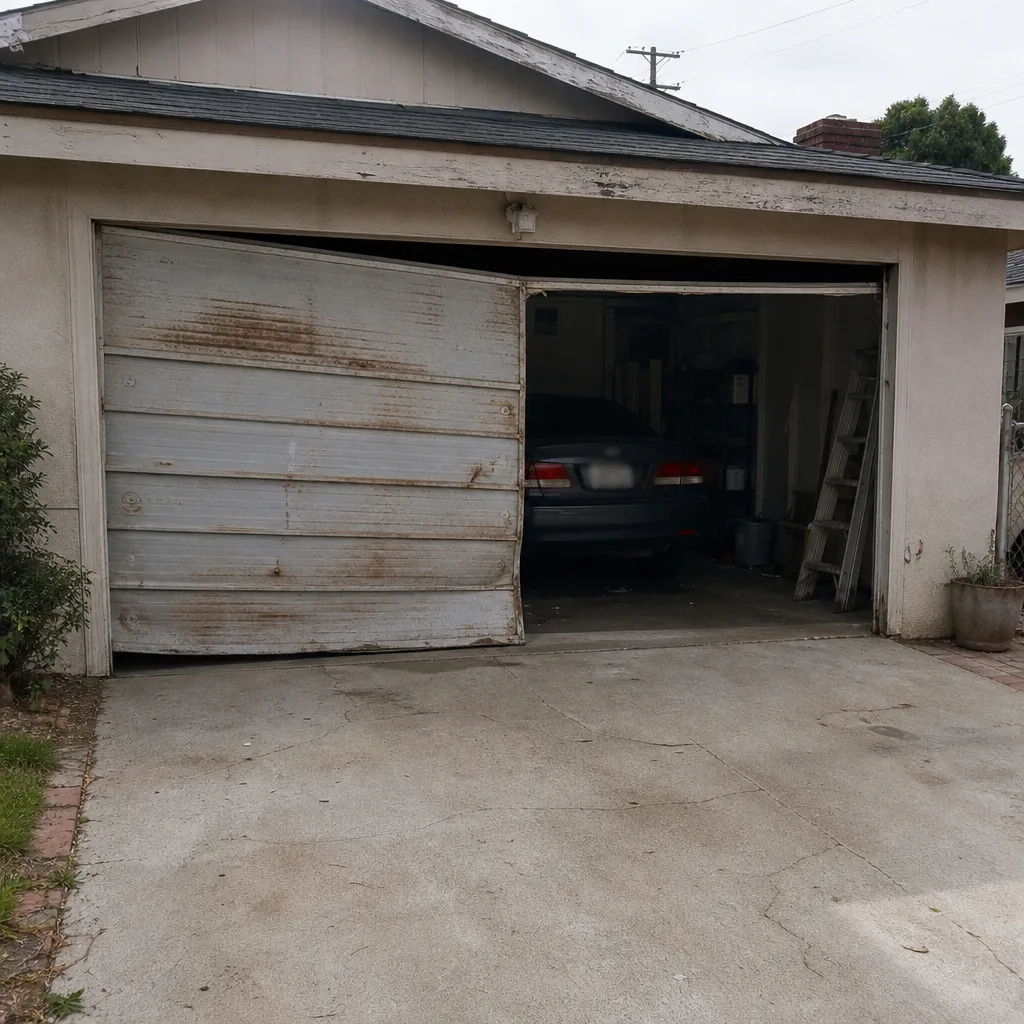 Before
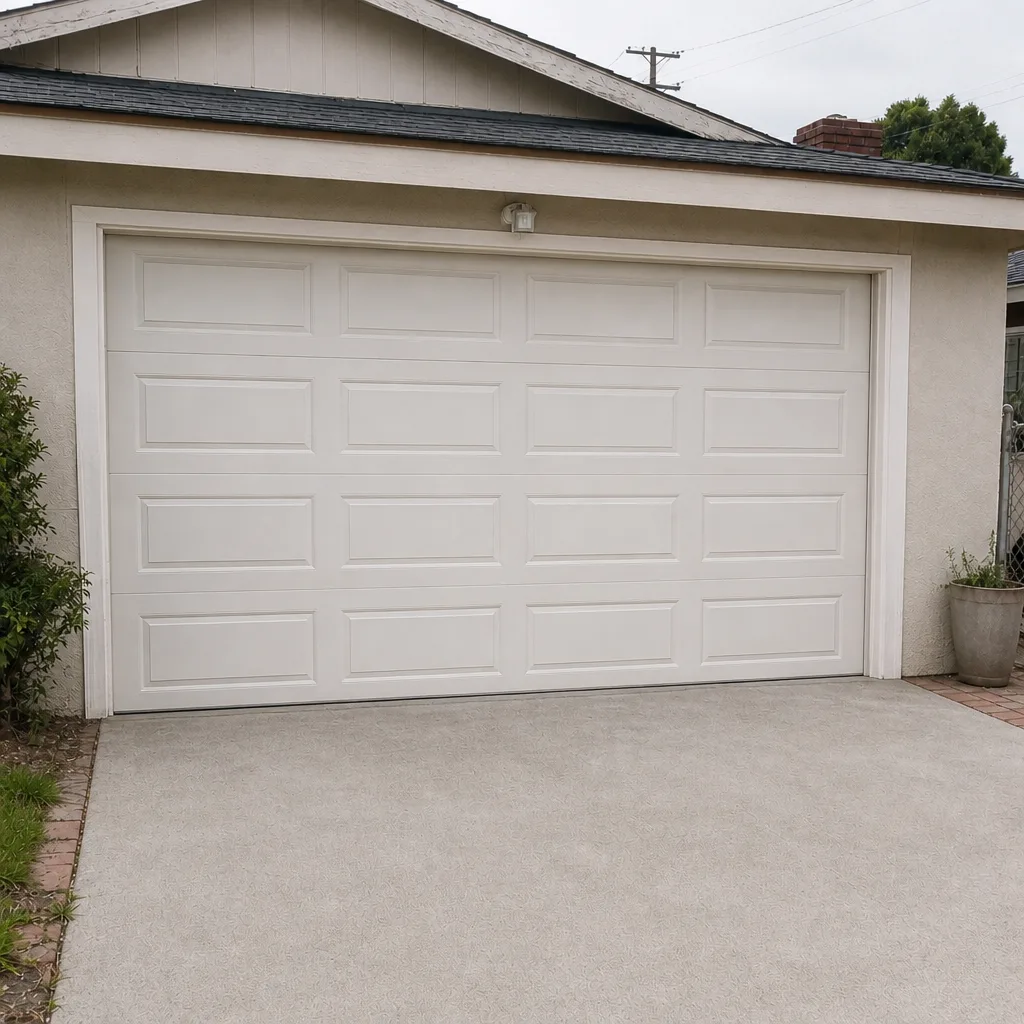 After
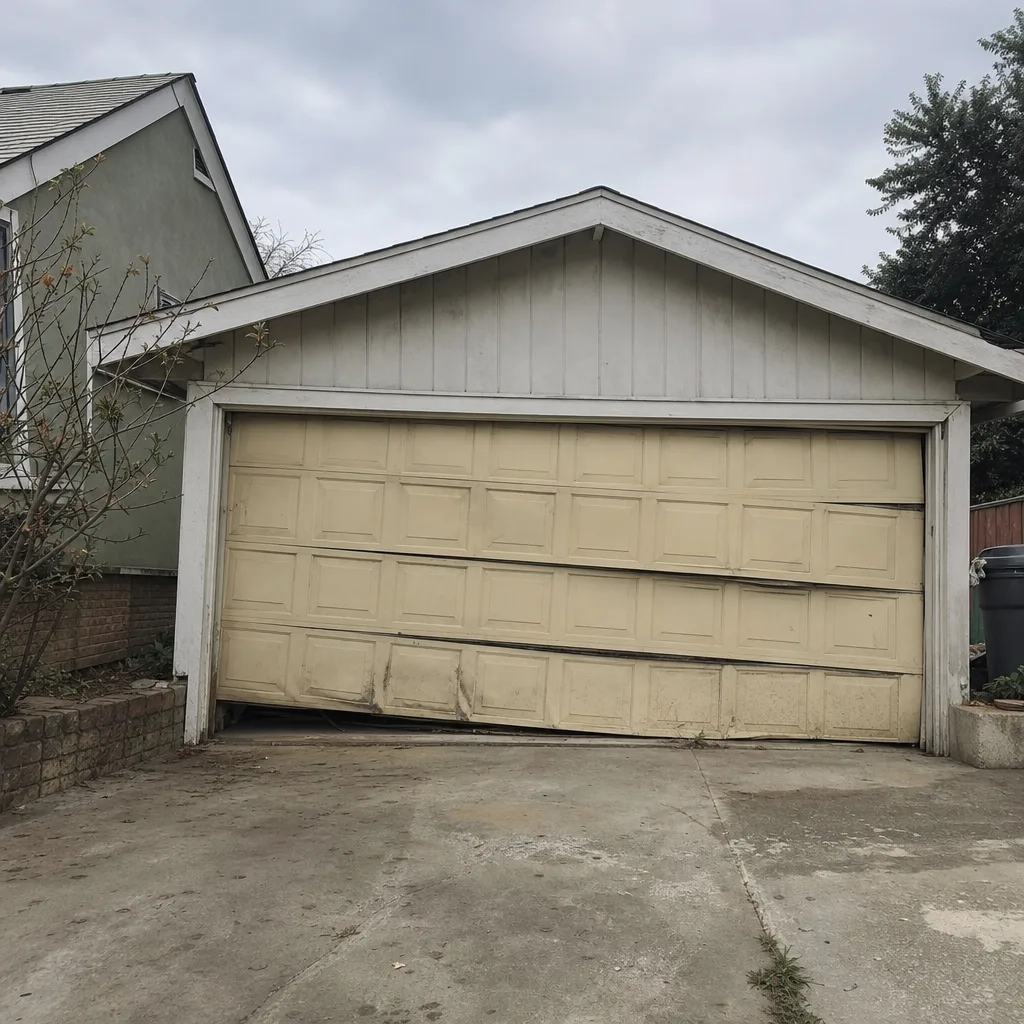 Before
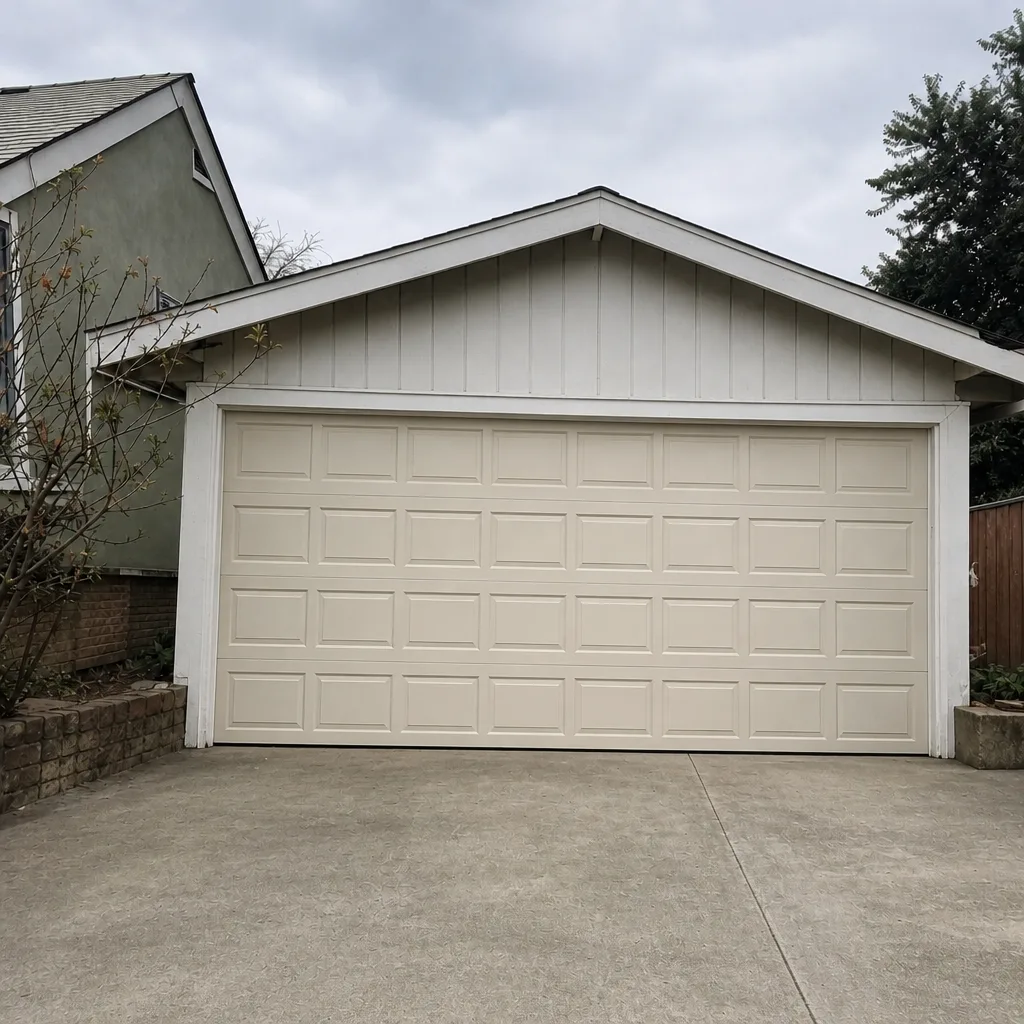 After
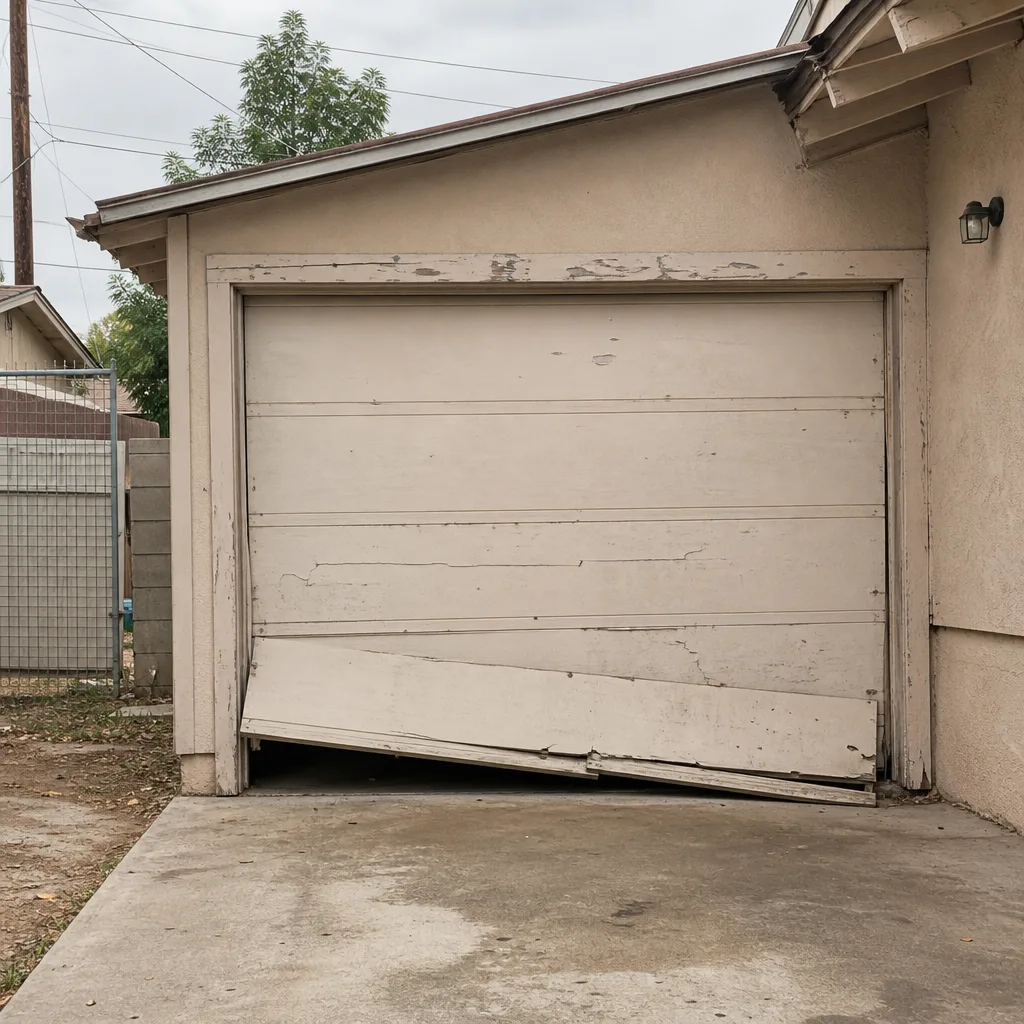 Before
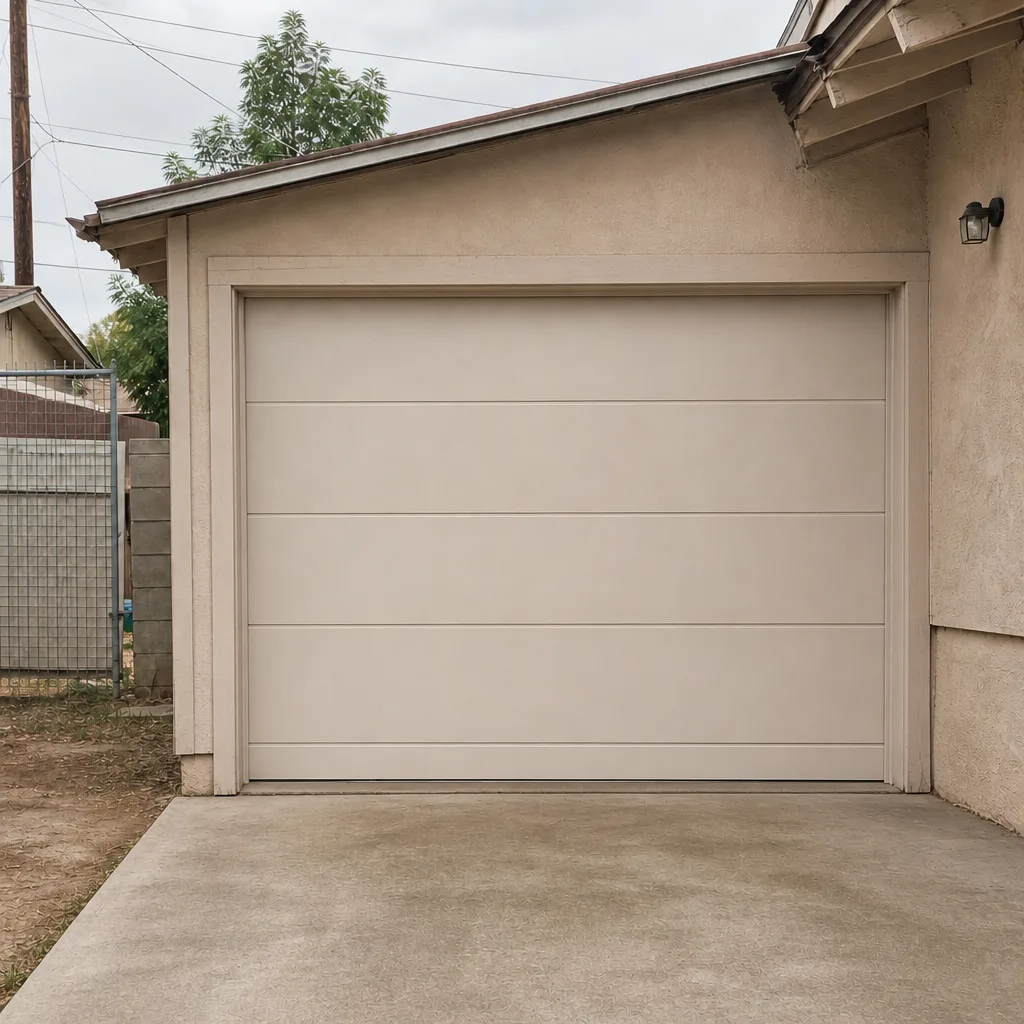 After
When to Call a Professional
Call a professional the moment you see a broken spring, a frayed cable, a door off its track, or a door that drops hard when you disengage the opener. These are not adjustment issues. They’re safety issues with stored mechanical energy behind them, and the risk of injury from a spring or cable failure is real. You should also call if you’ve run the release-handle test and the door itself is heavy or unbalanced, or if the opener runs but won’t move the door. Those are the calls where having someone who does this trade, and only this trade, matters most.
Garage Door Repair Sylmar offers free estimates in Sylmar. Call (855) 360-5967. We answer 24/7. Fast dispatch from 7am to 7pm, Sunday through Friday.
Frequently Asked Questions
Most common garage door repairs in Sylmar cost between $150 and $400 for parts and labor, depending on the component. A sensor replacement or track adjustment runs on the lower end. A spring replacement, which includes both springs as a matched pair, typically runs $250 to $500. A full opener replacement starts higher because the unit itself is the largest cost. The written estimate is the exact price, and it’s agreed before any work starts. Call (855) 360-5967 for a free estimate on your specific door.
Yes, same-day repair is available for most common problems. We answer 24/7 and dispatch fast from 7am to 7pm, Sunday through Friday. If you call in the morning with a broken spring, a frayed cable, or a failed opener gear, we can usually have a technician to your Sylmar home that day. The exact arrival window depends on call volume, which is why calling early helps.
No. The price is quoted and agreed before any work starts, and that’s the price you pay. If the technician discovers an additional issue during the repair, they’ll explain it and give you a new written price before proceeding. Nothing gets added to the invoice without your approval first.
Your garage door reverses when it’s closing because the safety sensors near the floor are misaligned, blocked, or faulty. The sensors project an invisible beam across the door opening, and when that beam is interrupted, the opener reverses as a safety measure. Check that both sensor lights are solid, that nothing is in the beam path, and that the lenses are clean. If the problem persists, the sensors or their wiring need replacement.
A loud garage door is usually the result of dry metal-on-metal contact in the hinges, rollers, or opener drive system. In Sylmar’s dry climate, the factory lubrication wears off faster than it does in more humid areas. A proper lubrication service, plus checking for worn rollers and loose hardware, usually quiets the door significantly. If the sound is more of a grind than a squeal, you may have a bearing or gear problem that needs replacement.
We service the eight most widely installed garage door and opener brands: LiftMaster, Chamberlain, Genie, Clopay, Amarr, Wayne Dalton, Craftsman, and Raynor. That covers the vast majority of doors and openers in Sylmar homes. We work on the brand you already have, and we stock the parts for those systems, which means faster diagnosis and correct parts the first time.
The Bottom Line
Sylmar’s garage doors fail in predictable ways, and the warning signs are there if you know what to look for. A door that’s slow, noisy, or slightly uneven is telling you something. A door that drops when you pull the release handle needs spring work before the opener burns out too. Check the sensors first when the door won’t close. Pull the release handle when the door won’t move. And never, under any circumstances, touch a spring or cable that’s under tension. When the problem is beyond the safe-to-DIY line, call us at (855) 360-5967. We answer 24/7. Fast dispatch from 7am to 7pm, Sunday through Friday. Free estimates, upfront pricing, and a company built for this trade only.
Written by the team at Garage Door Repair Sylmar, serving Sylmar since 2015.