
Last updated November 4, 2026
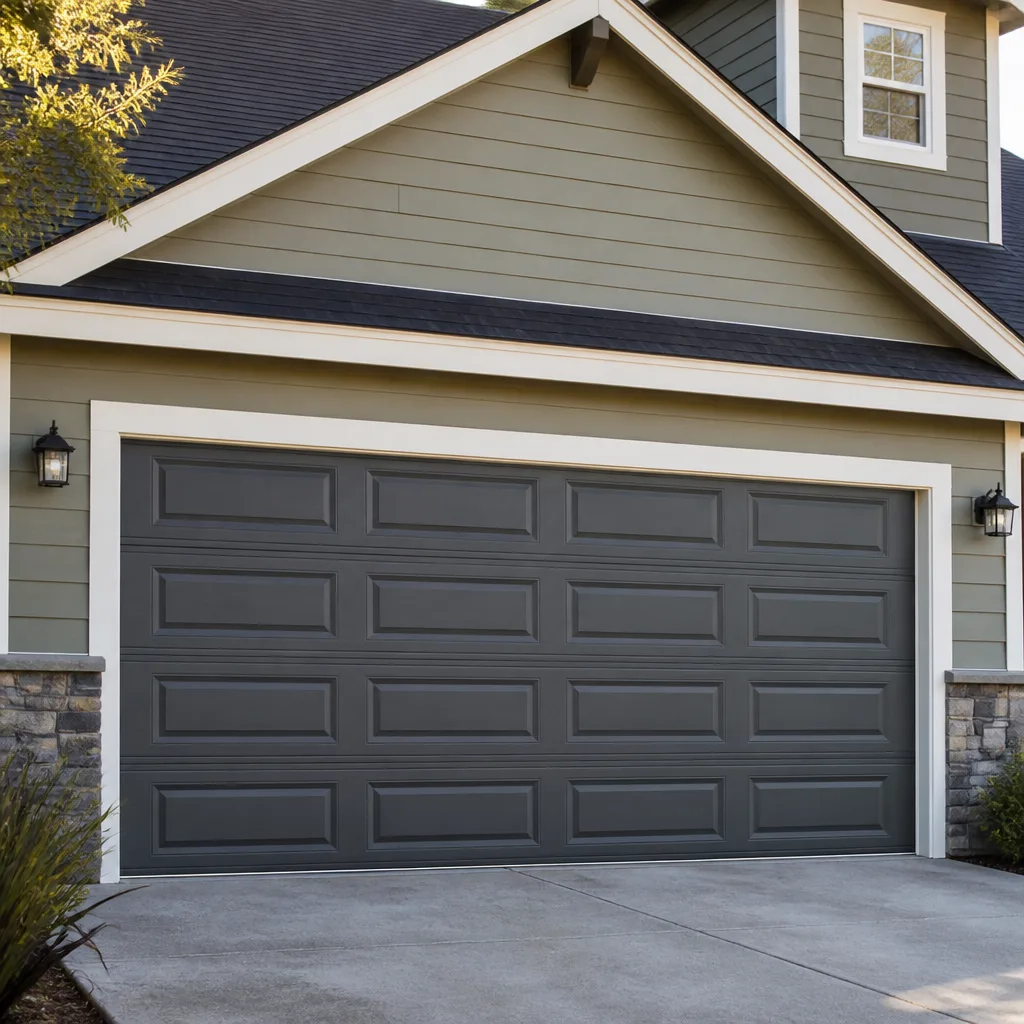 Raised-panel steel
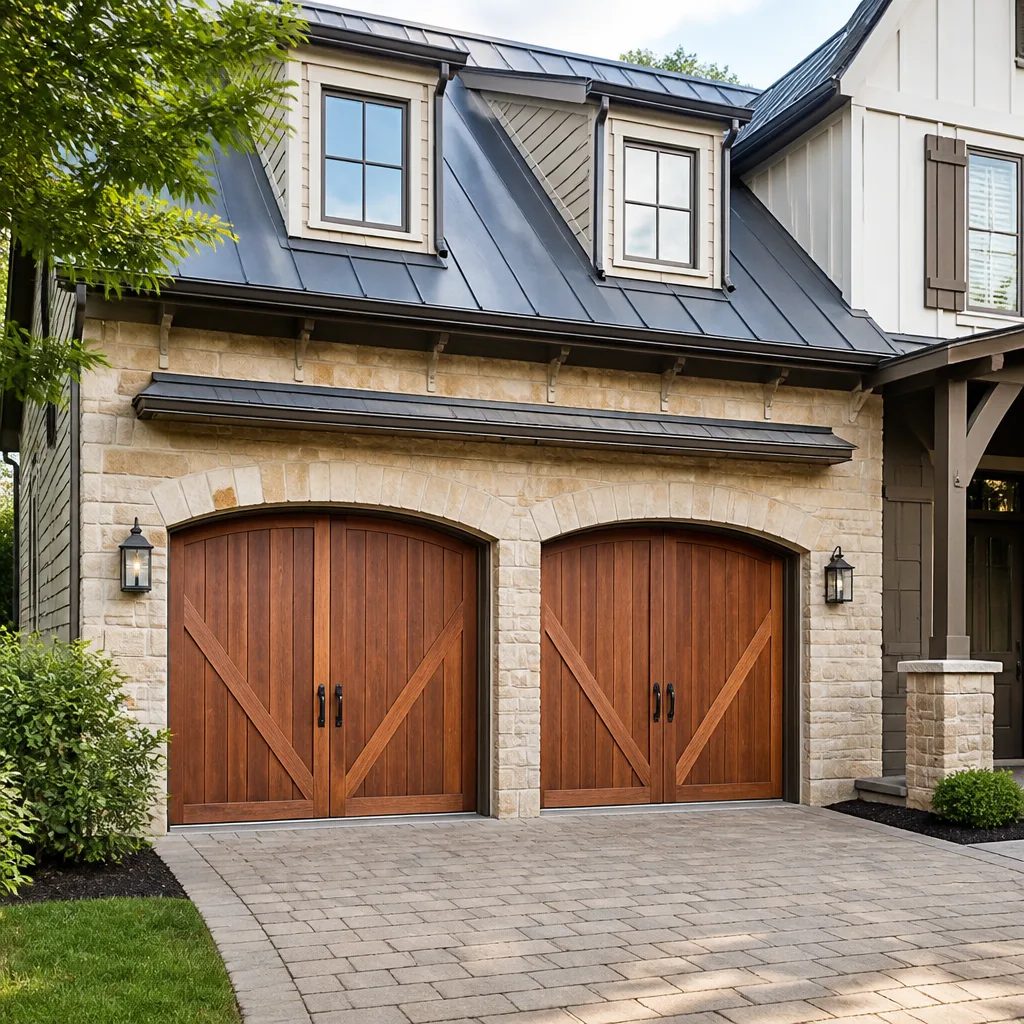 Carriage house
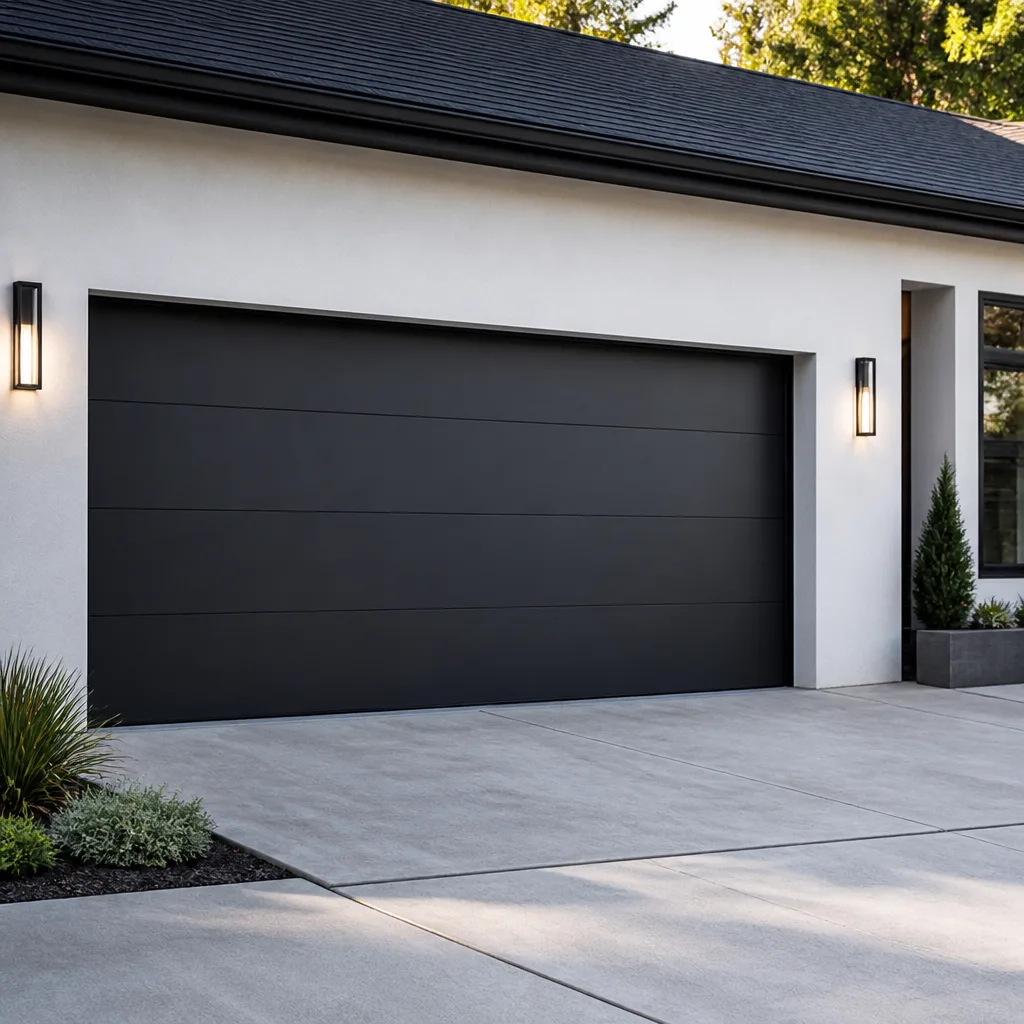 Modern flush
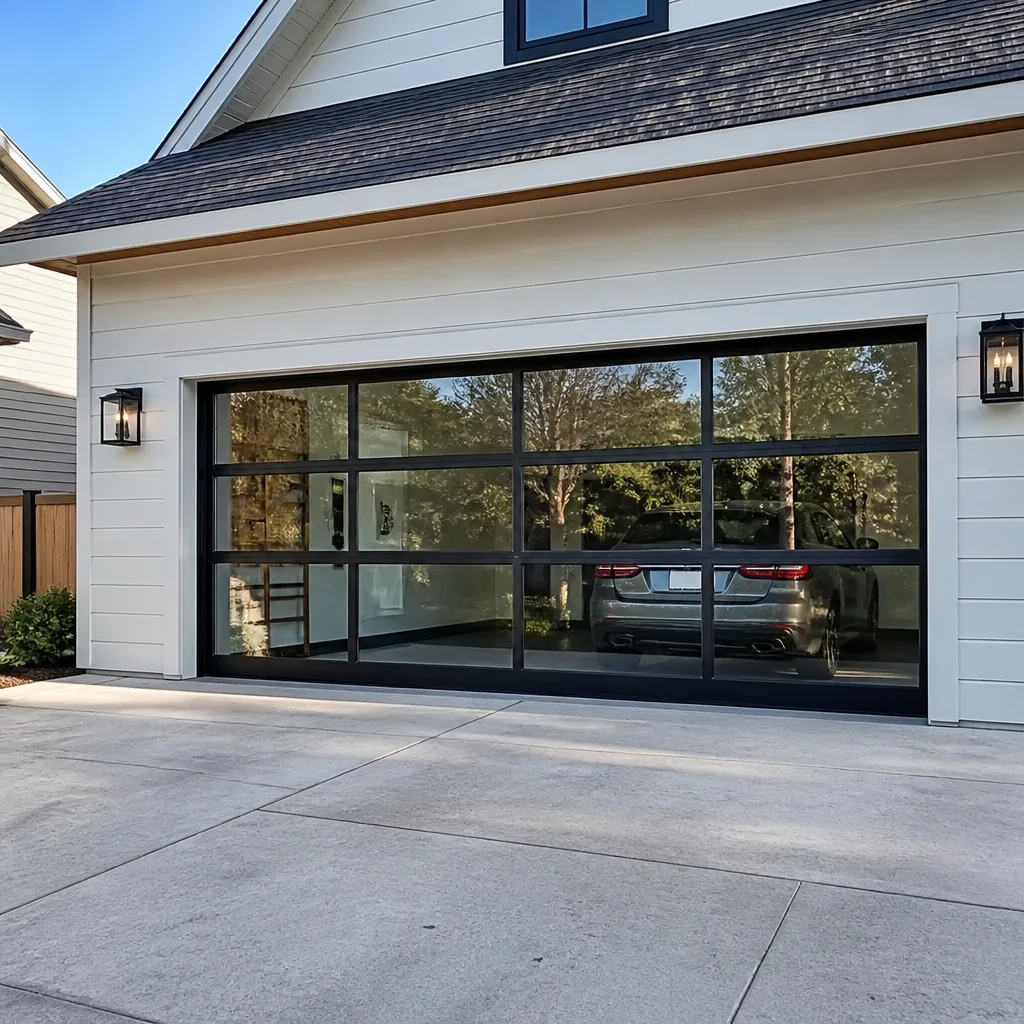 Full-view glass
 LiftMaster openers
 Chamberlain openers
Full 25-point door and opener safety check with every visit - springs, cables, rollers, tracks, and your LiftMaster or Chamberlain opener included
You get a price before we start. It does not change when the truck arrives.
Get your free estimateGarage Door Warning Signs: A Sylmar Homeowner’s Reference Guide
Most garage door warning sign guides tell you to listen for “unusual sounds.” That’s about as useful as telling someone to watch for “car trouble.” A grinding noise on the left side when the door is halfway up is not the same problem as a grinding noise when the door first starts moving. They point to different components, different repair costs, and different levels of urgency. This guide maps specific symptoms to specific failing parts so you know what’s cosmetic, what’s urgent, and what needs a technician in Sylmar before the door stops entirely.
Quick Answer
Garage door warning signs in Sylmar fall into four categories: sounds (grinding, squealing, popping), visuals (frayed cables, cracked springs, sagging sections), opener behavior (reversing, slowing, failing on first attempt), and movement (jerking, hesitation, imbalance). A frayed cable or cracked spring is urgent and needs same-day attention. A door that’s slightly slow but balanced may wait for your next service call. The monthly balance test described below catches most developing safety problems before they become emergencies.
Styles & brands we work with
- Raised-panel steel
- Carriage house
- Modern flush
- Full-view glass
- LiftMaster openers
- Chamberlain openers
Table of Contents
- What Different Garage Door Sounds Actually Mean
- Visual Warning Signs: What’s Urgent vs. Cosmetic
- Opener Behavior Changes and What They Point To
- How the Door Moves: Jerking, Hesitation, and Imbalance
- The Monthly Test Every Homeowner Should Run
- Sylmar-Specific Factors That Affect Your Door
- Component-by-Component Failure Signals
What Different Garage Door Sounds Actually Mean
A garage door has roughly a dozen moving parts, and each one makes a different sound when it starts to fail. The key is matching the sound to the location and the timing. A squeal when the door first starts moving often points to the opener’s drive mechanism, while a grinding sound when the door is halfway up usually indicates a roller or hinge problem. Here’s how to read what you’re hearing.
Grinding
Grinding usually means metal-on-metal contact where there shouldn’t be any. If you hear it when the door first starts moving, the problem is often the opener’s gears or drive system. LiftMaster and Chamberlain openers use a worm gear that can strip over time, and a stripped gear produces a distinct grinding, chattering sound near the motor unit. If the grinding comes from the door itself, mid-travel, you’re often looking at worn rollers or a hinge that’s binding. Rollers with worn bearings don’t roll anymore; they slide. That sliding friction grinds against the track. The fix depends on which one you have, but both are cheaper to address before the part fails completely.
Squealing or Squeaking
A high-pitched squeal usually points to a dry or worn component moving under tension. The most common culprits are rollers, hinges, and the torsion spring system above the door. A squeak that’s been there for months and hasn’t changed is often just a lubrication issue. A squeal that’s getting louder, or that changes pitch as the door moves through its travel, suggests a part is wearing beyond what lubrication can fix. On Amarr and Clopay doors with nylon rollers, a squeal often means the bearing inside the roller has failed. On Wayne Dalton doors with their unique TorqueMaster spring system, a squeal from inside the tube indicates the spring is rubbing against its housing.
Popping or Snapping
A single loud pop from a garage door is never good. It often means a torsion spring has broken. Springs are under enormous tension, and when one fails, the sound can be startling: like a firecracker going off inside the garage. A door with a broken spring will not open properly; the opener may strain against the weight, or the door may lift a few inches and stop. If you hear that pop and the door seems heavy or refuses to move, stop using it immediately. The springs need professional replacement. This is not a do-it-yourself job: torsion springs are under enough tension to cause serious injury if mishandled.
Rattling
Rattling is usually less urgent than grinding or popping. It typically means something is loose: a hinge bolt, a track bracket, a handle, or a decorative window insert on a Clopay or Amarr door. Walk the door with your eyes while someone else operates it, watching for movement in places that should be stationary. Tighten what’s accessible. If the rattle persists, it may be internal to a section, which is a cosmetic issue rather than a safety one.
Humming Without Movement
If you press the wall button, the opener hums, but the door doesn’t move, the motor is running but the drive system isn’t engaging. On a belt- or chain-drive Genie, LiftMaster, or Chamberlain opener, this often means the drive coupler or sprocket has failed. On a screw-drive Craftsman, it can mean the carriage is stripped and sliding on the screw. This is a garage door opener repair issue, and it’s usually repairable without replacing the entire unit.
Visual Warning Signs: What’s Urgent vs. Cosmetic
Some visual signs mean “call today.” Others mean “keep an eye on it.” The difference matters, because ignoring an urgent sign can turn a $200 repair into a $1,500 door replacement. Here’s how to sort them.
Urgent: Frayed Cables
The cables on either side of the door do the actual lifting, working with the springs to carry the door’s weight. A cable that’s fraying is shedding individual wires, which means it’s losing strength. When it fails, the door drops on that side, the sections can twist, and the damage can be extensive. A frayed cable is a same-day repair in most cases. Don’t operate the door until it’s addressed. Replacing cables requires working with the spring system, so it’s a professional job.
Urgent: Cracked or Separated Torsion Spring
Look above the door when it’s closed. You’ll see one or two horizontal springs mounted on a shaft. A torsion spring that’s cracked, corroded, or has a clear gap where the coil has separated is done. It’s not “about to break.” It has broken, or it’s so fatigued that it’s no longer doing its job. A door with a failed spring is a safety hazard: the opener cannot hold it, and if a cable slips, the door can fall. This is a same-day repair.
Urgent: Door Sagging or Bowing When Open
Raise the door halfway and look at it from inside the garage. A door that sags visibly, or that bows in the middle, is telling you something structural is wrong. It can be a failing spring, a cracked section, or a strut that’s come loose. Any of these requires professional assessment. A sagging door is working against its own weight, which accelerates wear on every other component.
Cosmetic, Can Wait: Surface Rust on Hardware
Light surface rust on hinges and brackets is common in Sylmar, especially on older doors. It’s a maintenance item, not an emergency. Brush off the rust, apply a light lubricant, and keep an eye on it. If the rust has pitted the metal or the hinge is visibly thin, that’s different; replace it before it fails.
Cosmetic, Can Wait: Peeling Paint or Faded Panels
Paint peeling on a steel door or fading on a composite door is cosmetic. It doesn’t affect the door’s function or safety. It does, however, stop protecting the metal underneath. In Sylmar’s climate, the sun can be harder on a door’s finish than anything else in the garage. Touch up the paint when you notice bare metal showing, but the door itself is not in danger.
Cosmetic, Can Wait: Dents and Dings
A dent in a panel is cosmetic unless it’s deep enough to affect the door’s structural integrity or interfere with the section joints. Small dings from bikes, trash cans, or yard equipment are common. A dent that crosses a section seam, or that’s deep enough to crack the panel, is a different story; that panel may need replacing. But a typical door ding? It can wait.
Opener Behavior Changes and What They Point To
The opener is the most failure-prone component in a modern garage door system. It’s also the one homeowners often ignore until it fails completely. Opener-specific diagnosis is a dedicated service, not an afterthought. Here’s what different opener behaviors actually indicate.
Door Reverses Before Reaching the Floor
If the door closes partway and then reverses on its own, the opener’s safety system is doing its job. The most common cause is a misaligned or obstructed photo eye. The beam between the two sensors, one on each side of the door near the floor, gets interrupted by dirt, a leaf, a tool, or a misalignment. Clean the lenses with a soft cloth and check that both sensors point at each other. If the reversal continues after cleaning, the sensor itself may be failing, or the opener’s force settings may need adjustment.
Opener Runs Slower Than It Used To
A noticeable slowdown is rarely the motor. It’s usually the drive system wearing out, or the door itself getting harder to move. A chain that’s rusted or loose, a belt that’s fraying, or a screw drive that needs lubrication can all drag the door. But slowing can also mean the door’s balance is off, forcing the opener to work harder. A door that’s slower than it was six months ago is a door that’s telling you something. Get it diagnosed before the strain kills the opener.
Fails on First Attempt, Works on Second or Third
This pattern is often a capacitor problem in the opener’s motor, a sending unit issue in the wall button, or a logic board that’s starting to fail. We see it most on older Genie and Craftsman units, though it happens across all brands. The frustrating part is that the problem is intermittent: the door works most of the time, so it’s easy to ignore. But intermittent failures are often the precursor to total failure. The opener is warning you.
Grinding or Stripping Sound from the Motor Unit
On LiftMaster, Chamberlain, and Raynor openers, a plastic drive gear inside the motor unit can strip. When it does, the motor runs but the drive doesn’t engage, and you hear a grinding, chattering sound from the unit itself. This is a known failure point on many models. It’s repairable; the gear is a replaceable part. But continuing to operate the opener after the gear strips will score the shaft and damage the motor.
Opener Runs, Door Doesn’t Move
This is covered in the sounds section above, but it bears repeating: a humming opener with no door movement is a drive system failure, not a door failure. The bypass is simple; pull the red release cord and open the door manually. That tells you the door itself moves fine, which isolates the problem to the opener. From there, it’s a garage door opener repair call, and the repair is usually faster and cheaper than replacing the unit.
Range of the Remote Gets Shorter
If you need to be closer and closer for the remote to work, something is interfering with the signal. Check for new electronics in the garage: LED bulbs, battery chargers, or anything with a transformer can generate interference. A failing remote battery is the simplest cause; replace it first. If the range is still poor, the opener’s receiver may be failing, or the antenna wire may be damaged. This is a minor annoyance that can become a door that won’t open at all.
How the Door Moves: Jerking, Hesitation, and Imbalance
A healthy door moves smoothly, at a consistent speed, from fully open to fully closed. Any deviation from that is a warning sign. The movement pattern tells you where the problem is.
Jerking or Shuddering While Moving
A door that jerks or shutters as it travels is binding somewhere. The most common causes are a bent track, a roller that’s seized, or a section hinge that’s frozen. A bent track can happen from a vehicle bump, a falling object, or years of minor impacts. A seized roller drags instead of rolling, and the door fights it the whole way. These problems get worse with use. The longer they go, the harder the opener works, and the more wear you put on the springs.
Hesitation at a Specific Point
If the door pauses at the same point every time, there’s an obstruction in the track at that spot, or the track itself is misaligned there. Look for a screw that’s backed out, a bracket that’s loose, or a section that’s binding against the frame. A door that hesitates consistently is pinpointing the problem for you. Pay attention to where it happens, and tell your technician; that information saves diagnostic time.
One Side Higher Than the Other
When the door is down, the bottom should sit flush across the entire width. When it’s open, the sections should be level. A door that sits higher on one side has a cable problem, a spring problem, or a track problem. This is an urgent sign: cables and springs are under tension, and an imbalanced door is a door that can fail catastrophically. Don’t operate it. Call for professional service.
Door Slams When Closing
A door that drops heavily in the last foot of travel isn’t closing; it’s falling. This means the springs aren’t doing their job. The springs are what make the door feel light. When they’re worn or broken, the opener or the operator is catching the full weight of the door. A slamming door is a door with a spring problem, even if the spring hasn’t snapped yet. Springs wear out gradually; they don’t always fail all at once. A door that’s been getting heavier over months is showing you a spring that’s losing tension.
Door Drifts Up or Down When Stopped
A properly balanced door stays put when you stop it partway. If it drifts up, the springs are overpowering the door. If it drifts down, the springs are weak. Either way, the balance is off, and the springs need attention. This is not an adjustment the homeowner should make. Torsion springs hold enough stored energy to cause severe injury if they’re adjusted incorrectly. Call a professional.
The Monthly Test Every Homeowner Should Run
This is the test that catches most developing safety problems. It takes two minutes, and it tells you more about your door’s health than any sound or visual inspection. Run it once a month. Here’s how.
- Close the door. Pull the red release cord to disconnect the opener. This is the cord hanging from the opener rail.
- Lift the door manually. It should lift smoothly, without significant effort, and it should stay up around waist height when you let go.
- Lower the door halfway. Let go. It should hold its position or move very slowly. If it drops, the springs are weak. If it shoots up, the springs are too strong. Both are problems.
- Check the cables. With the door down, look at both cables. They should be tight and smooth, with no frayed wires.
- Check the springs. Look above the door. The springs should have no visible gap or crack.
- Reconnect the opener. Pull the release cord again and operate the door with the opener once to re-engage the carriage.
If the door passes all of these, it’s in decent shape. If it fails any of them, especially the balance test in step 3, call for professional service before the problem compounds. A door that’s slightly out of balance today is a door with a broken spring in six months, and the spring will typically fail at the worst possible time.
Sylmar-Specific Factors That Affect Your Door
Your garage door lives in a specific place, and that place shapes how it wears. Sylmar’s conditions are different from a coastal town or a mountain community, and the difference matters for maintenance.
Heat and Sun Exposure
Sylmar gets real summer heat, and the sun beats on a west- or south-facing garage door for hours. That heat does two things. First, it breaks down the finish on steel and composite doors faster than in more moderate climates. A door that’s faded and chalky isn’t just ugly; the paint or coating is no longer protecting the metal underneath. Second, heat accelerates the breakdown of plastic components: roller bearings, opener gears, and sensor housings. We see more plastic component failures in Sylmar than in cooler areas.
Dust and Dry Air
Santa Ana winds and dry conditions mean dust gets everywhere, including inside your garage door tracks and hinges. Dust mixes with lubricant to form a gritty paste that accelerates wear on rollers and hinges. A dry climate also means parts that need grease or oil get dry faster. Where a homeowner in a humid climate might go years between lubrication, a Sylmar door benefits from more frequent attention to rollers and hinges.
Homes in the Hills
Parts of Sylmar sit on hillside lots, and a garage door on a sloped driveway deals with more than a door on flat ground. Water runs down the driveway toward the door during rain, and over time, the bottom seal and the bottom section take more abuse. A good bottom seal matters more on a sloped lot. If the seal is cracked or stiff, it’s not keeping water, dirt, and pests out. It’s also letting dust in, which compounds the problems above.
Older Homes, Older Doors
Sylmar has a mix of housing stock, and many garages have doors that were installed when the house was built. A door that’s 25 years old isn’t necessarily unsafe, but it’s at the end of its service life. The springs, even if they’ve been replaced, have been carrying the same old panels, the same old hardware, and the same old tracks. If you’re spending money on repairs every few months on an older door, it may be time to think about whether repair or replacement makes more sense. A new door is also better insulated and quieter, which matters when the garage is attached to the house.
Component-by-Component Failure Signals
Here’s how to match the symptom you’re seeing to the component that’s failing. In our experience, most door problems are diagnosed from this table, and the fix is usually a matter of getting the right part in the right place.
Springs
What they do: Lift most of the door’s weight. The opener is just a guide; the springs do the heavy lifting.
Failure signals: popping sound, door feels heavy when lifting manually, door slams when closing, visible gap or crack in the spring, door won’t open or only opens a few inches.
Urgency: Urgent. A broken spring means the door is not safely counterbalanced.
What to do: Call for same-day garage door repair. Do not operate the door.
Cables
What they do: Connect the spring system to the door, transferring lifting force and keeping the door level.
Failure signals: frayed wires visible on the cable, door sits uneven when open or closed, door jerks on one side, loud snap when the cable breaks.
Urgency: Urgent. A broken cable can cause the door to fall.
What to do: Call for same-day repair. Cables are replaced with the springs as a matched system.
Rollers
What they do: Guide the door through the track. A door has 10-12 rollers, depending on height.
Failure signals: grinding at mid-travel, squealing that changes pitch, door shudders, uneven wear on the track surface, a roller that’s visibly wobbling or cracked.
Urgency: Moderate. A seized roller is a friction problem, not an immediate safety hazard, but it wears every other component.
What to do: Schedule repair when convenient, but don’t wait months. The longer a seized roller runs, the more it damages the track.
Hinges
What they do: Connect the door sections and let them bend as the door travels through the track’s curve.
Failure signals: a section that’s misaligned at the seam, visible movement where a hinge is loose, clicking or knocking sound at a specific point in the travel, a hinge that’s cracked or has a missing rivet.
Urgency: Moderate to urgent, depending on severity. A hinge that’s failing puts stress on the adjacent section.
What to do: Replace the hinge before it fails. This is a routine repair.
Tracks
What they do: Channel the rollers and guide the door from vertical to horizontal.
Failure signals: jerking at a specific point, hesitation at a specific point, visible bend or kink, track brackets pulling away from the wall, a track that’s visibly out of level.
Urgency: Moderate to urgent. A severely bent track can cause the door to derail.
What to do: Don’t try to straighten a bent track yourself. A bent track is a professional repair, and often a section replacement.
Opener Drive System
What it does: The chain, belt, or screw that moves the carriage along the rail, translating motor rotation into door movement.
Failure signals: humming without movement, grinding from the unit, slow operation, jerky operation, visible fraying on a belt or rust on a chain.
Urgency: Moderate. The door can still be operated manually with the release cord.
What to do: Call for garage door opener repair. Most drive system failures are repairable without replacing the entire opener.
Photo Eyes and Safety Sensors
What they do: Project an invisible beam across the door opening; if anything breaks the beam, the door reverses.
Failure signals: door reverses for no visible reason, door won’t close unless you hold the wall button, sensor lights blinking, sensors visibly misaligned or damaged.
Urgency: Moderate. The door still works with the wall button, but the safety reverse is not functioning.
What to do: Clean the lenses and check alignment. If the problem persists, have the sensors tested. Safety sensors are mandatory; a door that closes without them is a hazard for kids and pets.
Bottom Seal
What it does: Seals the gap between the door and the floor; keeps out water, dust, pests, and drafts.
Failure signals: visible cracks or stiffness in the rubber, daylight visible under the door when closed, water or dust coming under the door in rain or wind, rodents or insects getting into the garage.
Urgency: Low, but replace sooner rather than later. The seal is cheap; the damage it prevents isn’t.
What to do: A bottom seal is a simple, inexpensive replacement. It’s a maintenance item, not a repair emergency.
Common Mistakes to Avoid
- Ignoring a balance test failure. A door that fails the manual balance test is a door with a spring problem. Springs don’t fix themselves, and a worn spring will eventually break, usually when the door is open and the family car is underneath it. Run the test monthly and act on the result.
- Lubricating with the wrong product. WD-40 is a cleaner and a water displacer, not a garage door lubricant. It strips away the grease the door needs, and then it dries. Use a lithium-based grease on metal-to-metal contact points and a silicone spray on plastic parts.
- Adjusting springs yourself. This is the one that sends people to the emergency room. Torsion springs hold an enormous amount of stored energy, and the winding bars used to adjust them can slip. The springs are a professional job, full stop.
- Replacing the opener when the door is the problem. We see this regularly: a homeowner spends hundreds on a new opener, and the door still doesn’t work right. The problem was the door’s balance, and the opener was just struggling against it. Get a diagnosis before you spend on parts.
- Ignoring intermittent opener problems. An opener that fails on the first attempt but works on the third isn’t minor. It’s the opener’s way of telling you a component is failing. In our experience, an intermittent opener fails permanently within a few months. Fix it on your schedule, not on its schedule.
- Running the door with a broken spring. If the spring is broken, the opener may still lift the door, but it’s working against the full weight, and the door can fall if a cable slips. Don’t operate the door at all until the spring is replaced.
- Waiting until the door fails completely to call. Every one of the signs in this guide is a warning, not an inconvenience. The door that’s been slowing down for months, that’s been a little jerky, that failed twice last week, is going to stop at the worst time. Call while the door still opens; emergency service calls are never as convenient as scheduled repairs.
See the difference
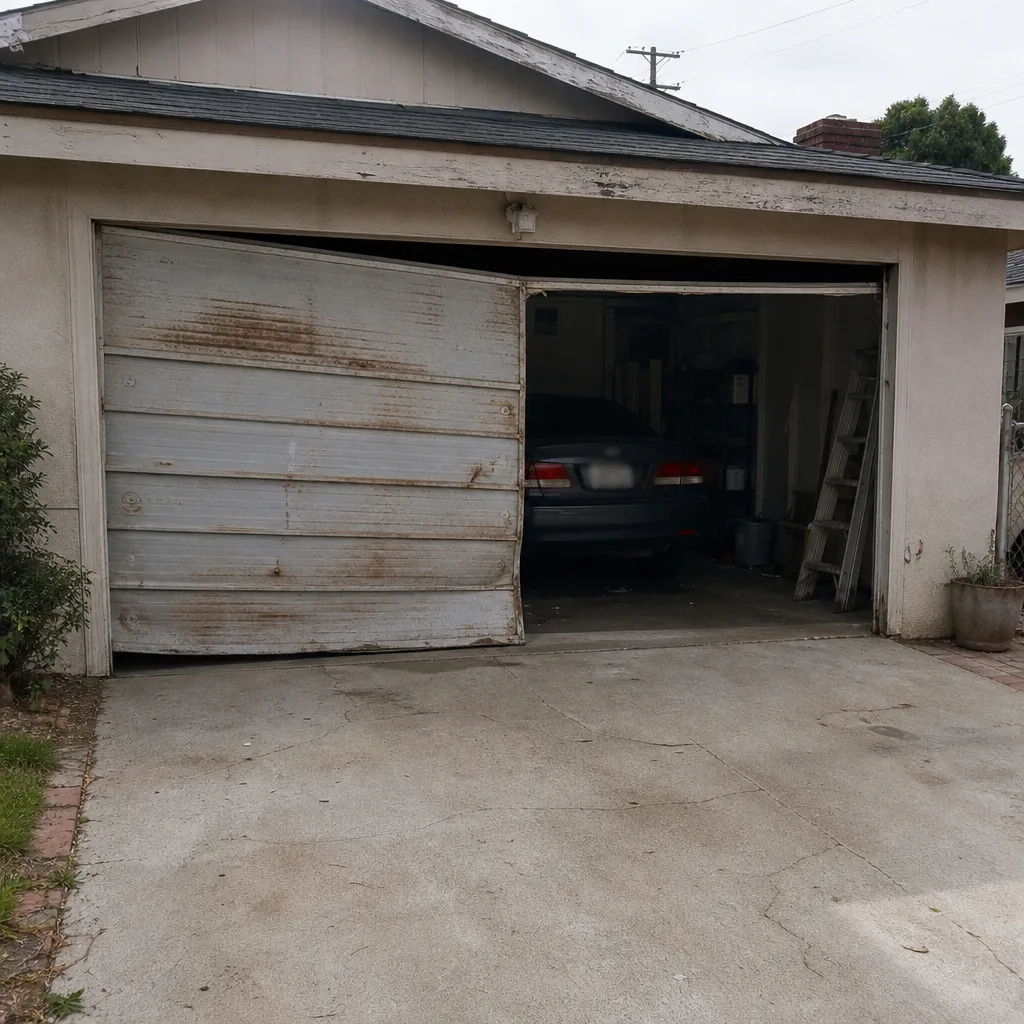 Before
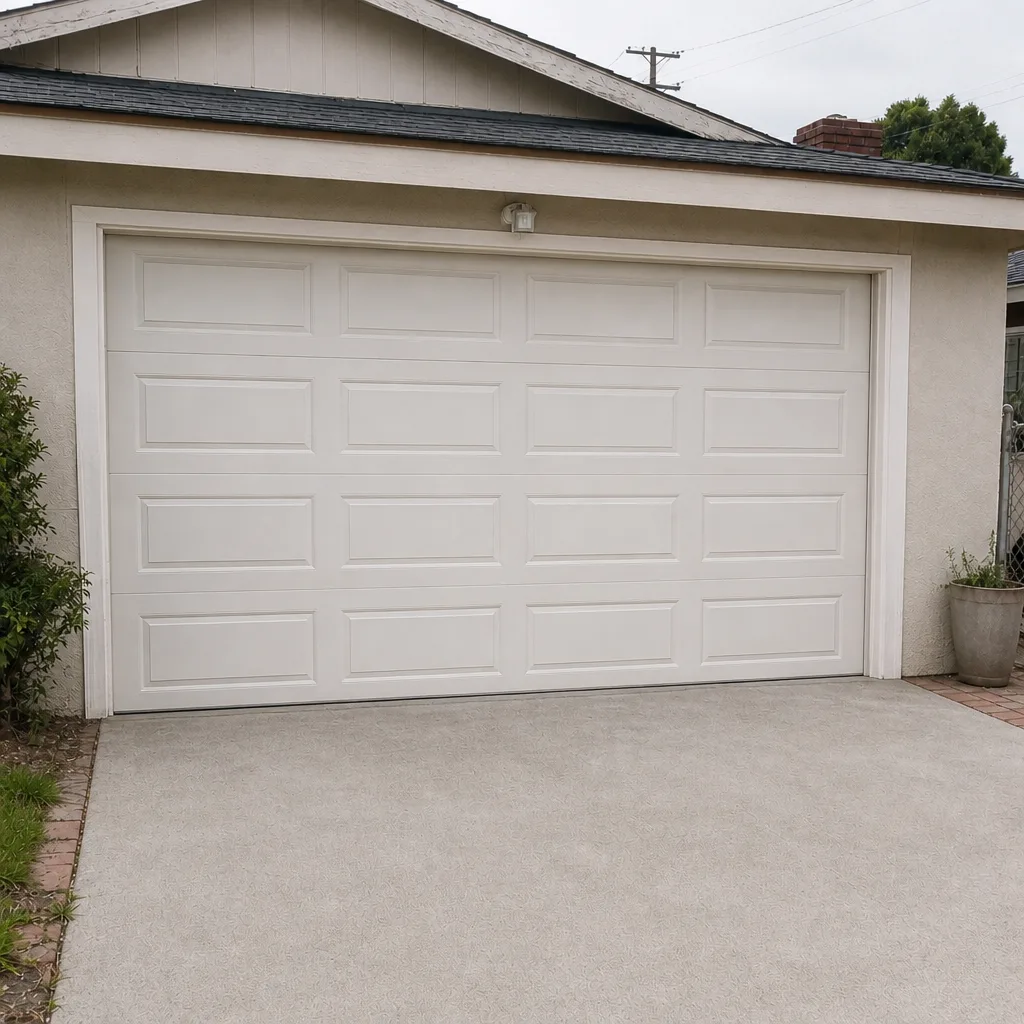 After
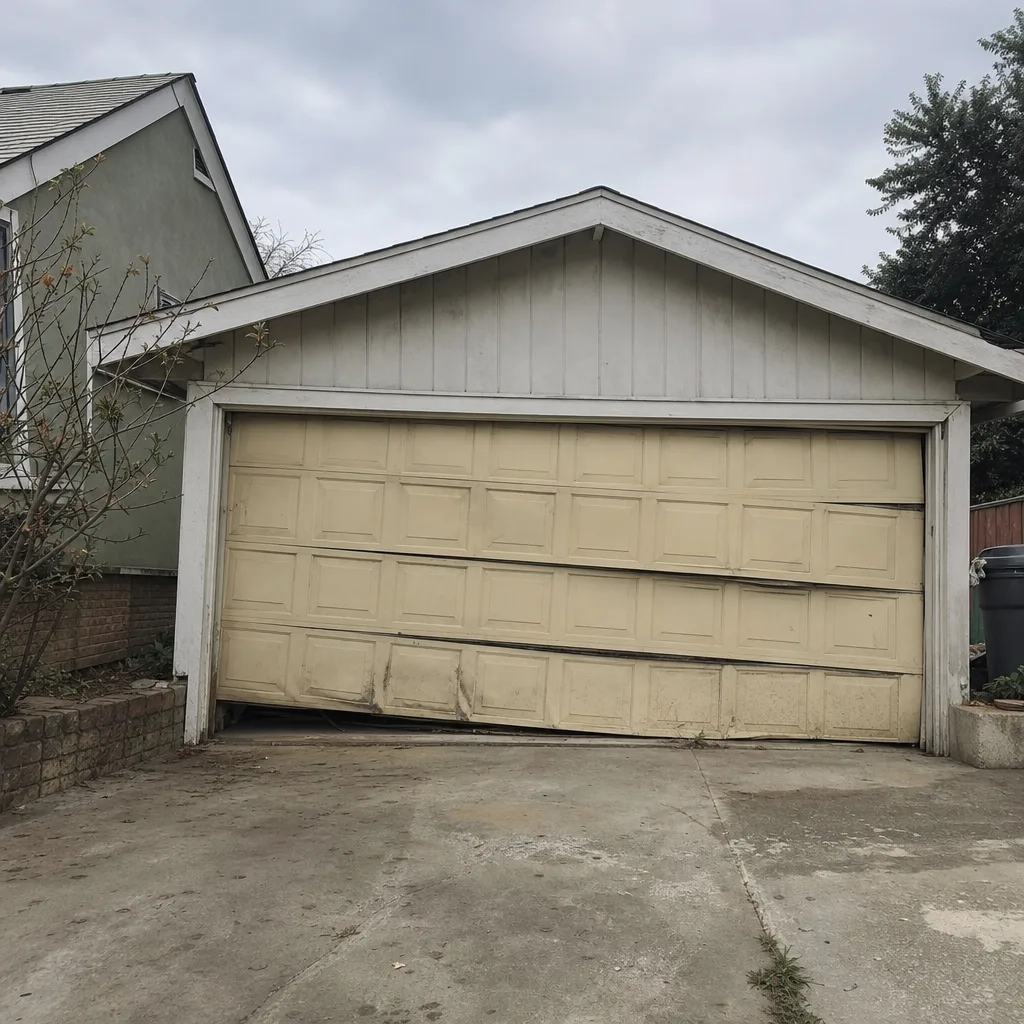 Before
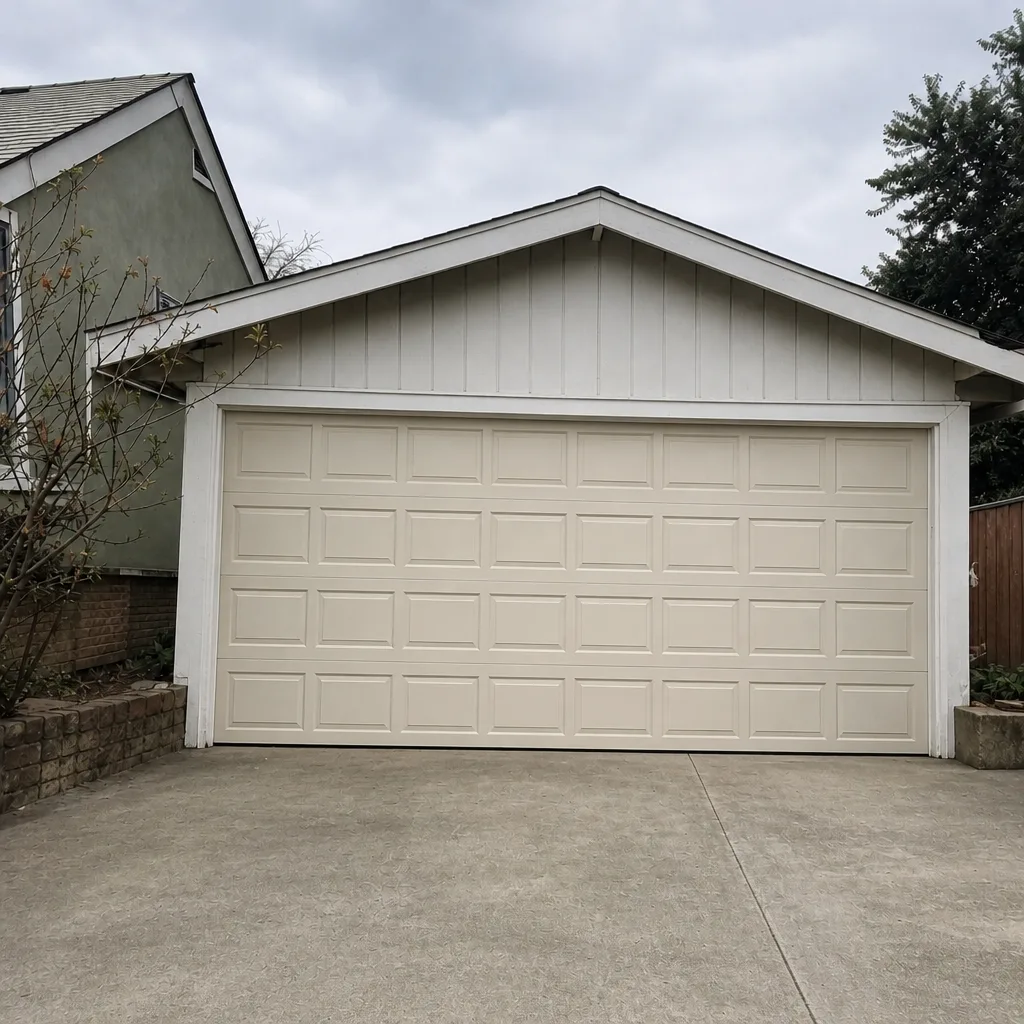 After
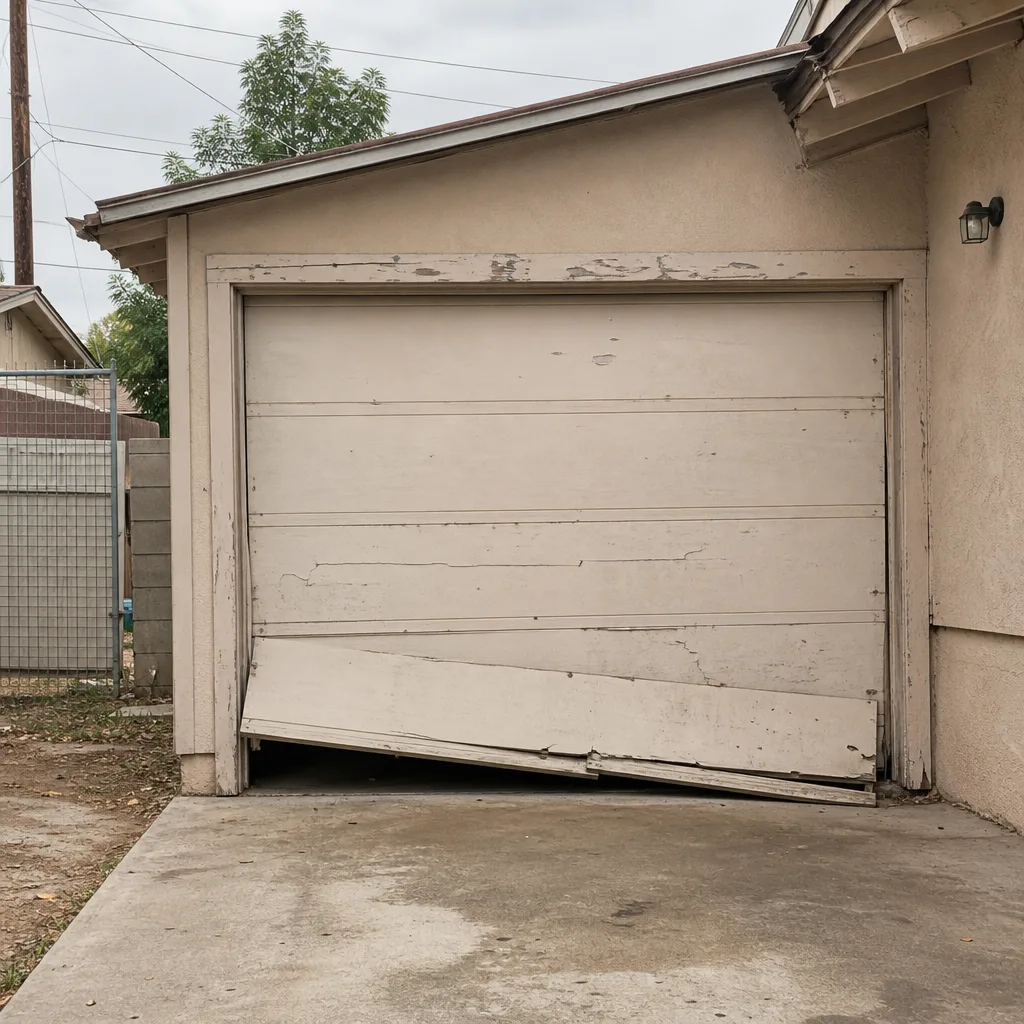 Before
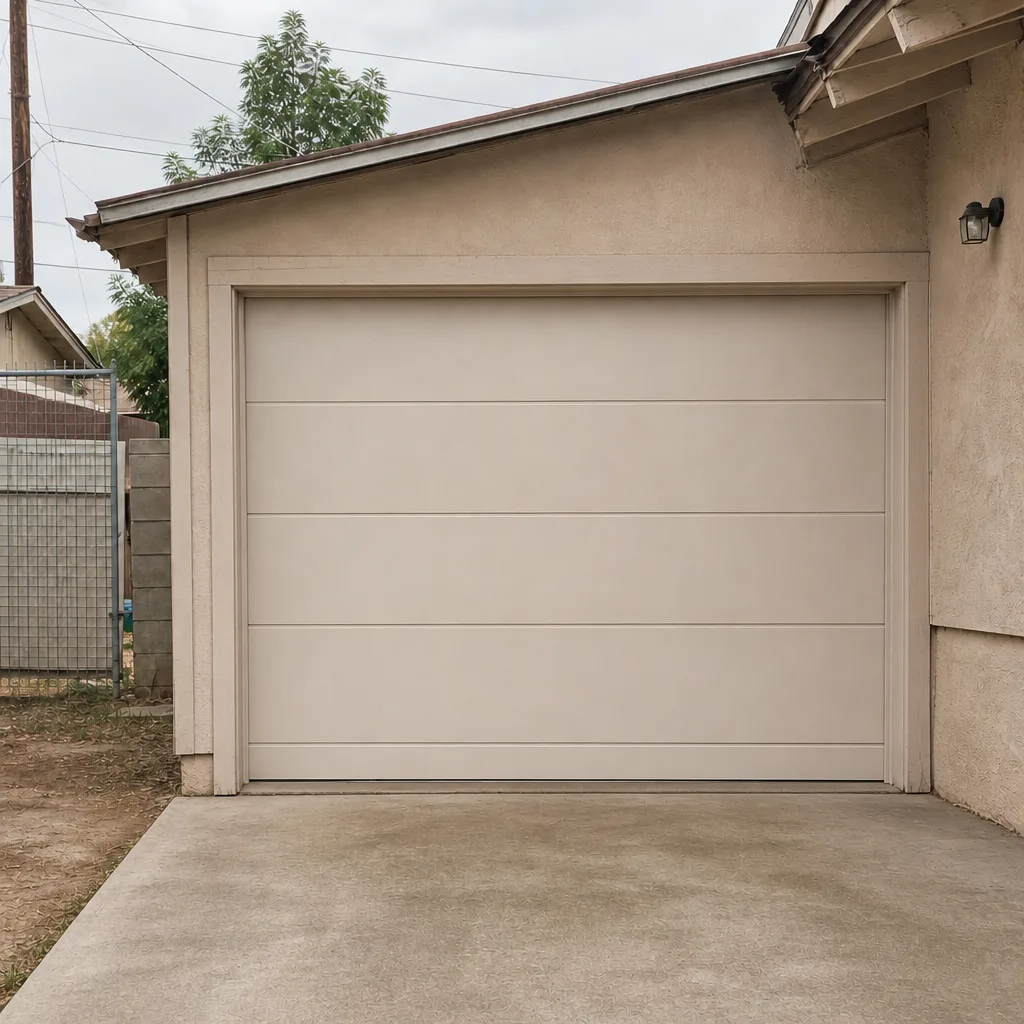 After
When to Call a Professional
Call a professional when the sign is urgent: a broken or cracked spring, a frayed or broken cable, a door that’s off balance, or a door that’s fallen or come off its tracks. Call also when the problem is beyond a homeowner’s safe reach: anything involving spring tension, track realignment, or opener diagnostics. Some repairs are straightforward, and some require training and specific tools. We can tell you which one you’re looking at. Garage Door Repair Sylmar offers free estimates in Sylmar, and we work on the brand you already have, from Amarr and Wayne Dalton to Craftsman and Raynor. Call (855) 360-5967. We answer 24/7. Fast dispatch from 7am to 7pm, Sunday through Friday.
Frequently Asked Questions
The most common problem we see in Sylmar is worn rollers, followed by spring failures. Rollers wear faster in the dry, dusty conditions common here, and dust mixes with lubricant to grind the bearings down. Spring failures, on the other hand, are a matter of age and use cycles; the hot summers don’t help, but most springs simply reach the end of their lifespan.
Look above the door when it’s closed. A torsion spring that has a visible gap in the coil, or that’s clearly separated into two pieces, is broken. You may also have heard a loud pop or bang from the garage, and the door will feel extremely heavy if you try to lift it manually. If the door won’t open more than a few inches, the spring is likely the cause.
No. A frayed cable is losing its load-bearing capacity, and when it fails, the door can drop on that side, twisting the sections and potentially falling. A frayed cable is a same-day repair. Don’t operate the door until a professional has replaced the cable and checked the spring system.
The most common cause is a photo eye misalignment or obstruction. The sensors on either side of the door, near the floor, project a beam that must connect. Dirt, a leaf, a tool, or even a spider web on the lens can break the beam and cause the door to reverse. Clean the lenses, check the alignment, and try again. If the problem persists, the sensors or the opener’s logic board may need attention.
Repair costs in Sylmar vary by the part and the labor involved. A roller or hinge replacement is typically less expensive than a spring replacement, which is less expensive than replacing a full section or the entire door. The written estimate is the price, agreed before any work starts. Call (855) 360-5967 for a free estimate. We answer 24/7. Fast dispatch from 7am to 7pm, Sunday through Friday.
If the door is newer and the problem is a single component, a spring, a roller, a hinge, then repair usually makes sense. If the door is approaching the end of its service life, if multiple sections are damaged, or if the door has needed several repairs in a short period, replacement may be the better long-term value. We’ll tell you which one makes sense for your door, your budget, and how long you plan to be in the home.
The Bottom Line
Your garage door talks to you. It tells you when a spring is wearing out, when a roller is seizing, when the opener’s drive is stripping, and when a cable is about to fail. The trick is learning to listen specifically instead of hearing only “that noise.” Run the monthly balance test. Pay attention to where sounds come from and when they happen. Watch how the door moves. When something matches a warning sign in this guide, act on it while the door still opens. The one call covers the door and the opener. Call (855) 360-5967 for a free estimate. We answer 24/7. Fast dispatch from 7am to 7pm, Sunday through Friday.
Written by the team at Garage Door Repair Sylmar, serving Sylmar since 2015.